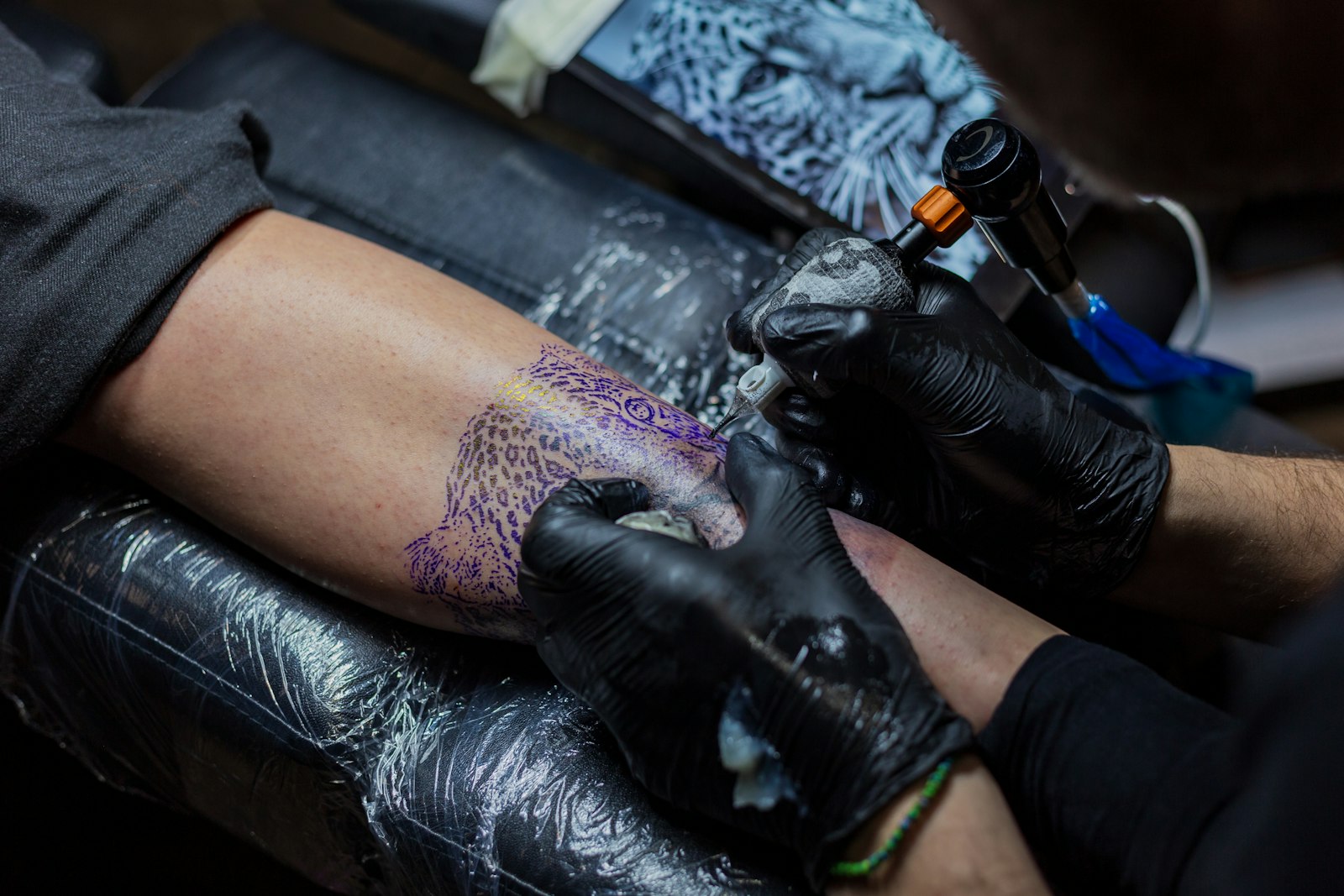
Your new tattoo is absolutely going to peel. It's not a mistake or a problem—it's actually your body doing exactly what it needs to do to heal. But peeling can freak you out, especially when you're staring at flakes and wondering if that's normal or if something's going wrong. Learning the tattoo peeling stages helps you stop second-guessing yourself and stick to a solid aftercare routine. At Cleopatra Ink Seattle, we make sure every client knows what's coming, because knowing how to heal is just as important as getting the art right in the first place.
The Timeline: When Peeling Actually Begins
Peeling doesn't happen on day one. Your tattoo has to move through a few different phases before you see any real flaking. Days 1 through 5 are mostly oozing and scabbing. Your skin just got punctured thousands of times, and your body responds by throwing up a protective barrier. You'll notice some clear fluid mixed with ink—totally normal. By day 4 or 5, you've got a light scab forming, almost like a thin, delicate crust. That's when the real questions start.
The peeling stage usually kicks in around day 7 to 10, but it depends on your tattoo size, your skin type, and how well you've been taking care of it. Small or fine-line pieces often peel faster. Bigger pieces with solid color sections take longer. Some people start flaking on day 6. Others don't see much until day 12. All of that is normal. Your skin is healing on its own schedule, not a calendar.
Five Things to Monitor During Each Peeling Stage
Not every type of peeling looks the same, and not all peeling means your tattoo is healing the right way. Here's what you should actually be watching for:
- Flake color and texture. Good peeling produces thin, papery flakes that are usually gray or see-through. If you're seeing thick, dark scabs that feel rubbery or raised, your tattoo might have been over-worked, or you need to change up how much moisture you're using. Too much keeps scabs soft in spots; too little makes them hard and stubborn.
- Ink loss during peeling. Some ink comes off with the flakes, and that's expected. Your artist knows this happens and accounts for it. But if you're losing big chunks of color or noticing your lines got way thinner since your session, snap a photo and message your artist. It could mean the needle went too deep or placement wasn't quite right.
- Surrounding skin condition. The skin around your tattoo should be slightly pink or just normal colored, not angry red, puffy, or hot. If the area outside the tattoo lines is inflamed, you might have an ink allergy or a secondary infection. You need a professional to look at that.
- Itching intensity and pattern. Light itching during peeling is fine—your skin is rebuilding and nerves are coming back to life. Intense itching in one spot with pus or heat is not. Mild itching across the whole piece that you can ignore is okay. Itch so bad you can't sleep means you should hit up your artist or doctor.
- Healing timeline consistency. Peeling should move along gradually over 2 to 3 weeks. You shouldn't watch all your scabs fall off on day 8, see nothing for a week, then suddenly start peeling again on day 20. Scattered or stop-and-start peeling usually means something's disrupting it—too much picking, not enough moisture, or sun damage.
How Cleopatra Ink Supports You Through Peeling
We don't just hand you a fresh tattoo and send you out the door at Cleopatra Ink Seattle. Our artists—Vee, Kuya Ramon, and Seray—all know the healing game inside and out, and you get detailed aftercare instructions written just for your piece. If you're getting blackwork that needs specific care or fine line work that demands a gentler touch, you'll know exactly what each peeling stage should look like.
Our studio runs hospital-grade sterilization, which means your skin starts healing in the cleanest environment possible. That cuts down unnecessary inflammation and helps your skin peel evenly instead of developing sore spots or infection risks. We also carry premium aftercare products and can tell you exactly which ointment or wrapping method works best for your skin and your tattoo style.
Clients tell us all the time that just knowing what peeling actually looks like—understanding that flakes on day 9 don't mean you messed up—changes their whole healing experience. One client who got a memorial piece from Kuya Ramon said understanding she'd see some ink loss during peeling meant she didn't panic when day 8 showed up with flakes. She trusted the process, kept doing her aftercare, and the piece came out beautiful.
Real Questions About Peeling Stages
Is it ever okay to pick at peeling tattoo skin?
Nope. Even if a flake is barely hanging on, picking it off messes with healing and risks taking ink with it. Your body will shed that skin naturally. Picking also opens the door to bacteria and scars. If loose skin is bugging you, just moisturize it gently and leave it alone. It'll fall off on its own within a day or so.
What if my tattoo doesn't peel at all?
Not every tattoo shows visible peeling. Some skin types shed so gradually you barely see it. Some pieces healed under a second-skin wrap like Saniderm, which controls moisture and keeps flaking minimal. If your tattoo feels totally healed and looks solid after 2 to 3 weeks, you're good. If it's still tender or shiny and wet after 3 weeks, it needs more time or a chat with your artist.
Can I shower during peeling stages?
Yes, but you've got to be careful. Showering with a new tattoo takes a light touch—use warm water, not hot, and don't blast the piece directly for the first week. Once you hit weeks 2 and 3, you can shower like normal, but pat dry gently instead of rubbing. Skip the pool, skip the bath, and keep it dry until all the peeling is truly done.
How much ink loss is normal during peeling?
Plan on losing somewhere between 5 and 15% of your ink during healing, depending on needle work and placement. Your artist knows this and might have pushed the line or color a bit harder to make up for it. If you're shedding more than that—if lines look way thinner or colors are noticeably faded—take some photos and reach out to your artist. You may need a touch-up once everything's fully healed, which usually takes 4 to 6 weeks.
Once you understand what happens at each tattoo peeling stage, healing stops feeling like guessing and starts feeling like something you can actually manage. Your body is doing what it's supposed to do, and your job is to support it with steady, gentle care. Questions about your specific piece or need personalized aftercare advice? We're here. Book a consultation with one of our artists or send photos—we're always happy to help clients through every step of healing.
Have a question about aftercare? Message your artist through the artists page, find the studio on the location page, or browse healed work in our gallery.
Explore more guides from our team on the Cleopatra Ink Seattle blog.