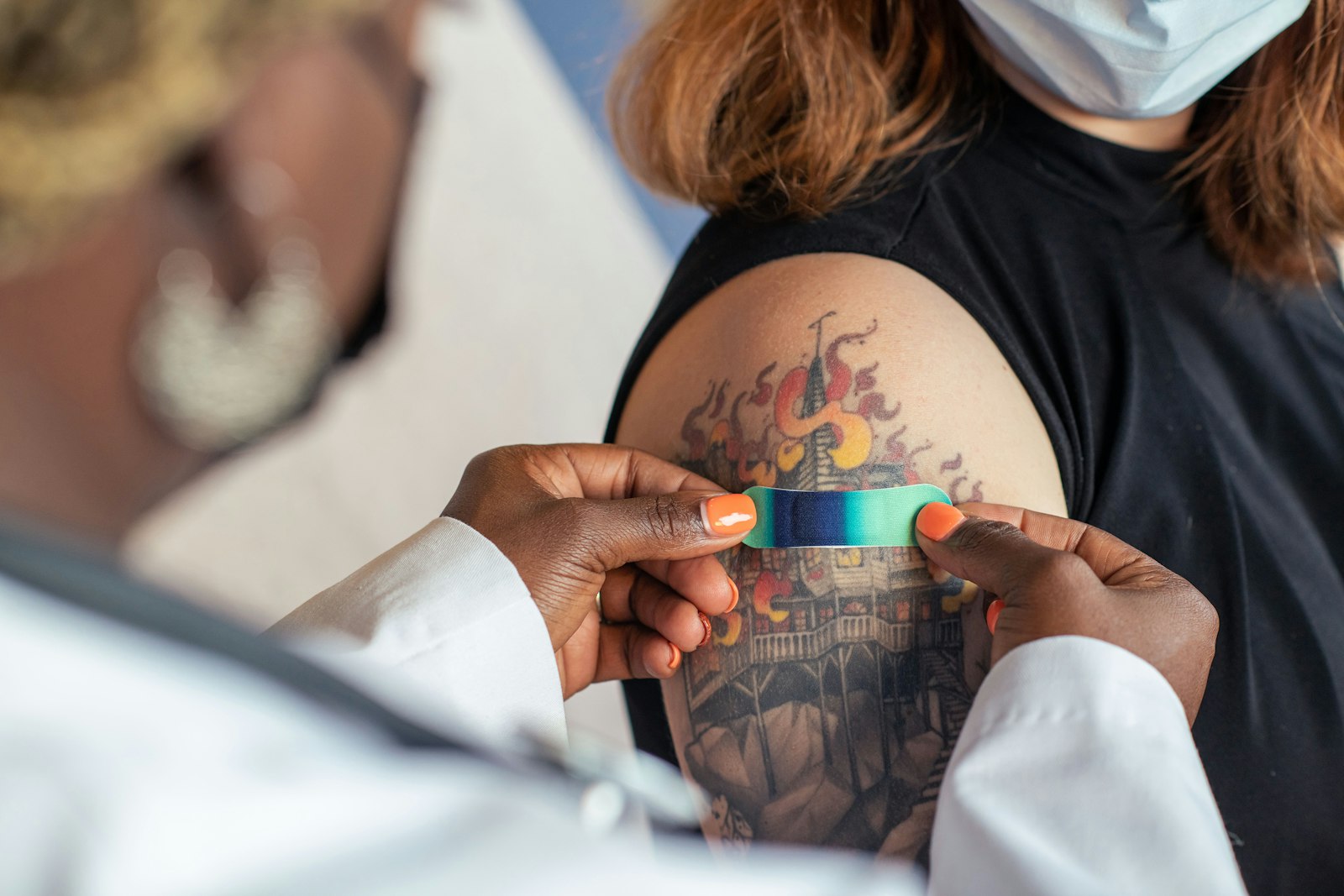
You walk out of Cleopatra Ink with fresh ink, and honestly, the real work starts there. Your aftercare matters as much as the needle work itself. Saniderm has become one of the most reliable tools for healing tattoos in Seattle, but plenty of people mess it up. This medical-grade adhesive bandage isn't just slapping a sticker on your arm—it's a breathable, waterproof barrier that shields your tattoo while letting it heal properly, cuts down on heavy scabbing and color loss, and keeps bacteria out. Our artists have watched clients walk out with vibrant color and watched others fade because of poor aftercare choices. We want you to nail this so your piece looks exactly as good healed as it does fresh.
What Saniderm Actually Does (And Why It Works Better Than Plastic Wrap)
Saniderm is built from acrylic adhesive and polyurethane—engineered to stay breathable and waterproof at the same time. Plastic wrap and regular bandages don't cut it because they don't maintain the right moisture level. Saniderm keeps the outer layer of skin supple instead of letting it crack and form heavy scabs. It blocks bacteria, sweat, and friction that would wreck your tattoo's integrity during healing.
The big advantage over old-school aftercare is that Saniderm stays put for 24 to 72 hours depending on the type. That means your fresh tattoo gets protected during its most fragile phase without constant handling. Your artist applies it right before you leave the studio, so you walk out already covered. You're not tempted to peel it off, scratch at it, or expose it to dirty surfaces while the ink's still settling into your skin.
Step-by-Step: Applying and Removing Saniderm Correctly
Getting this right starts the moment your artist wraps it. Here are five critical things to check before you leave and during removal:
- Confirm the edges are sealed completely. Any gap or loose corner invites bacteria and lets plasma leak out unevenly. Watch your artist smooth it down hard and verify that curves and corners are stuck tight. If you spot a lifted edge before walking out, ask them to trim and reapply that spot.
- Check that fluid accumulation under the bandage is normal, not alarming. Within 24 hours, you'll probably see clear or slightly yellow fluid pooling under there. That's plasma—your body healing itself. Cloudy white fluid is normal too. Dark red or black fluid pooling beyond the first few hours is a problem; contact us if that happens. Transparent pooling is fine and actually protective.
- Plan your removal timing based on bandage instructions, not guesswork. Standard Saniderm stays on 24 hours; some medical-grade versions go 72 hours. Your artist tells you which one and when to take it off. Don't leave it on longer just because it feels okay—the bandage loses effectiveness after its window closes, and keeping it on too long can irritate your skin or cause maceration (over-softening).
- Remove Saniderm in a clean, dry space with warm water available. Peel the edge slowly at a 45-degree angle toward the tattoo, not away from it. Run it under warm (not hot) water for about 15 seconds to help the adhesive release without stressing your skin. Pull too fast or at the wrong angle and you risk yanking fresh ink out with the bandage.
- Inspect the tattoo right after removal for infection signs. Once Saniderm's off, your tattoo should look bright, slightly puffy, and pink. Not blistered, not weeping dark fluid, not crusty all over. Minor scabbing is normal; thick or dark crusting means something went wrong during healing or the bandage trapped bacteria. If it looks off, text your artist or see a doctor the same day.
Why Cleopatra Ink Artists Trust Saniderm and How We Ensure Proper Healing
We use hospital-grade Saniderm applied by artists who know the bandage only works if the skin underneath is prepped right. Before it goes on, we clean your tattoo thoroughly, pat it completely dry, and apply a thin layer of our trusted aftercare product to make sure the adhesive bonds to clean skin, not residue. Vee, Kuya Ramon, and Seray all use Saniderm, but they pick it strategically—Vee loves it for fine line and botanical work where color needs to stay locked in place, and Kuya Ramon reaches for it on realism and portrait pieces where ink density can't shift during those first vulnerable days.
One of our regulars got a big color piece from Kuya Ramon and swears Saniderm made the real difference. Her previous tattoos without it faded and got dull where she'd picked at early scabs. With Saniderm, she left it alone, removed it properly, and the color stayed rich. That's the outcome we see again and again in healed work.
After Saniderm comes off, the next phase matters just as much. You'll switch to gentle washing and standard tattoo cream—our tattoo aftercare cream guide walks you through that. The bandage handles the critical 24- to 72-hour window; what you do after removal keeps the tattoo flawless forever.
Common Saniderm Questions and Troubleshooting
Can I shower with Saniderm on?
Yes, absolutely. Saniderm is waterproof, so quick showers are totally fine. Skip baths, hot tubs, and pools while it's on. Short water exposure actually helps keep healing clean. Just pat it dry gently after with a clean towel.
What if my skin gets irritated under Saniderm?
Mild redness or slight itching is normal during healing. If you develop a rash, intense burning, or allergic reaction signs (rare but possible with acrylic adhesives), peel it off and let the tattoo air dry. Wash it gently with unscented soap and water. Hit us up or see a doctor if it keeps going. Some skin types just react to adhesive bandages. Saniderm works for most people, but we can talk other options if you know adhesives bother you.
Is Saniderm necessary, or can I just use cream and careful washing?
Saniderm isn't required—solid cream-based aftercare works fine. But it removes a big variable: human error. It stops you from over-washing, touching the tattoo constantly, or letting it sit exposed to environmental junk. For people who fidget with fresh tattoos or work in dirty conditions, Saniderm is huge. If you're disciplined about keeping your hands off, cream alone is enough. We recommend Saniderm for best results and peace of mind, but your artist will talk through your specific situation.
How do I know if something's wrong after Saniderm is removed?
Normal healing looks like light scabbing, mild swelling, and pink or slightly red skin. Bad signs are dark oozing, thick crusty scabs, redness spreading beyond the tattoo, warmth to the touch, or pus. See your artist or a doctor if you spot any of that. Most issues caught early are preventable or fixable. Don't wait—reach out the same day if something feels wrong.
Saniderm only works if you apply it correctly, remove it correctly, and understand what's happening underneath. Our artists walk you through every step at Cleopatra Ink, and we're here if you have questions during healing. For the full picture, check out our complete tattoo aftercare guide for Seattle clients, which covers the weeks after Saniderm comes off.
Ready for your next piece with proper aftercare locked in? Book a consultation with one of our artists and we'll map out the best healing strategy for your design, skin, and lifestyle.
Got aftercare questions? Message your artist through the artists page, check the location page, or browse healed work in our gallery.
More guides from the team on the Cleopatra Ink Seattle blog.