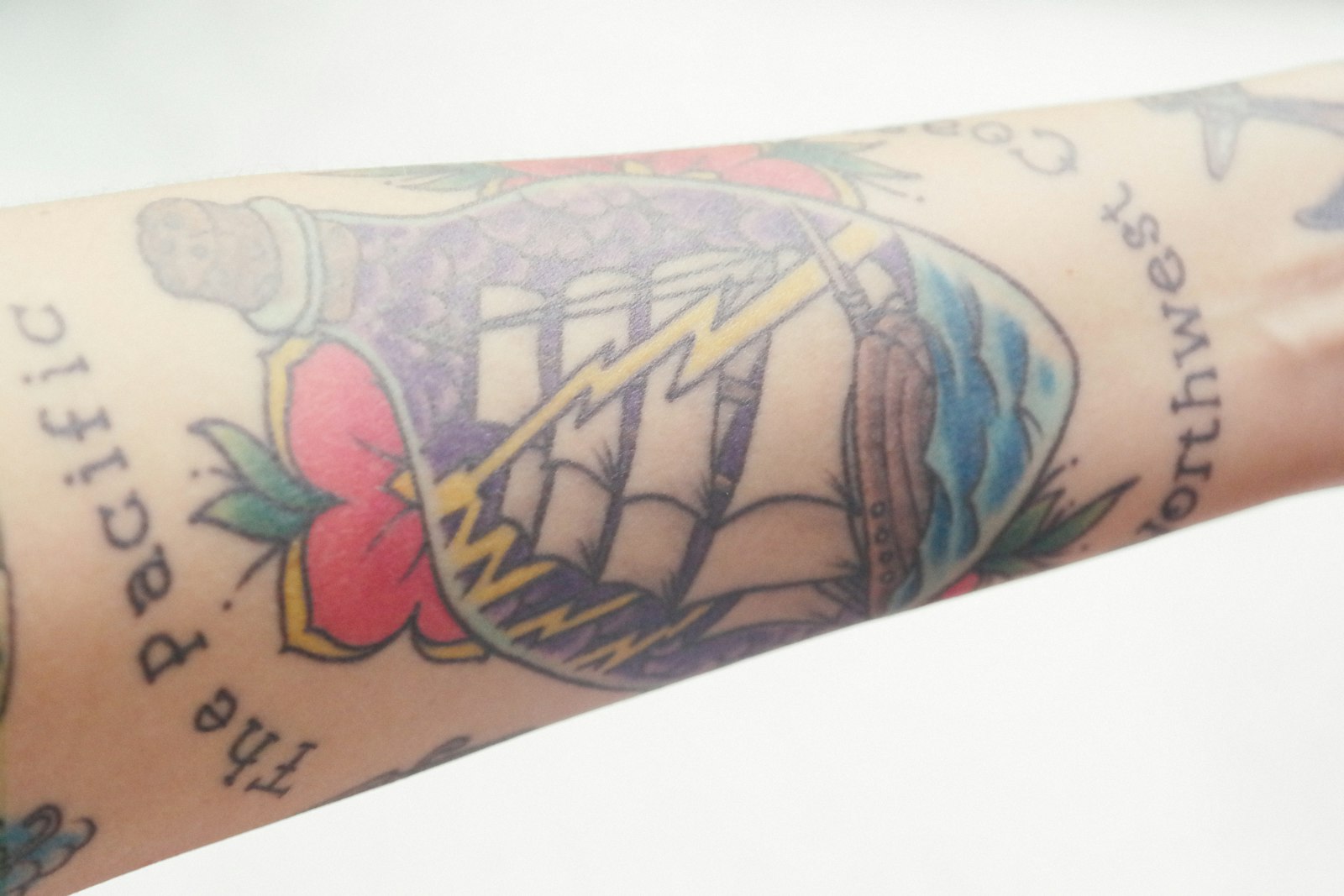
You just got inked at Cleopatra Ink and the summer heat's already got you thinking about Green Lake or the Sound. Your friends are texting about pool days. But honestly? Swimming with a fresh tattoo isn't happening yet. The first two to three weeks are critical. Chlorine, saltwater, bacteria in lakes—they'll all mess with your healing. Let me break down what actually happens, when it's safe, and how to protect the work you just paid for.
Why Water Exposure Threatens Fresh Ink
Your fresh tattoo is an open wound. Those thousands of needle punctures create pathways into your skin, and your body's already working overtime to heal. For the next two to three weeks, you're forming scabs and regenerating cells. Water doesn't just sit on top—it seeps into those punctures and brings problems with it. Bacteria, ink blur, weakened scabs. All of it bad.
Chlorine specifically is brutal. Pools use it to kill bacteria, sure, but it also breaks down ink particles and interferes with your skin's repair process. Ocean water in the Sound or Pacific comes with salt crystals that irritate wounds and an insane number of microorganisms. Even "clean" lake water carries bacteria that colonizes open tattoos and causes infections. Not worth the risk.
You're also looking at color loss, uneven healing, or lines that blur together if water gets in there too early. Especially if you got something from one of our artists—Vee's fine-line botanicals, Kuya Ramon's realism work, or whatever custom piece you planned out—you want it healing perfectly.
The 5-Point Protection Checklist Before Any Water Exposure
Past the first three weeks and absolutely desperate to get near water? Here's how to minimize damage:
- Confirm your healing stage: You need a full 2–3 weeks minimum before any water contact. Scabs gone. Skin smooth, not glossy or tender. If you're still seeing ooze, redness, or raised patches, you're not ready.
- Invest in a waterproof bandage: Tegaderm, Second Skin, or medical-grade waterproof barriers seal things up while letting skin breathe. Not perfect, but infinitely better than nothing. Apply right before water, peel it off right after.
- Limit immersion time: A quick dip beats a long soak. Five to ten minutes in a pool is safer than an hour. Seattle's cold water does constrict blood vessels slightly, reducing ink bleed a little, but that's not an excuse—it just means the damage is slightly less bad.
- Avoid chlorinated pools for at least 2–3 weeks: Public pools are your enemy here. If you have to go in, pick a well-kept facility over one that looks questionable. Salt pools beat chlorine pools, but the rule stays the same: wait as long as you can.
- Rinse with fresh water immediately after: Pool, lake, Sound—doesn't matter. Cool, clean running water, gentle rinse, the second you're done. Dry with clean paper towels, not cloth. Then put your healing cream back on. You're basically resetting the healing clock.
How Cleopatra Ink Prepares You for Safe Water Exposure
We're not handing you a tattoo and waving goodbye. Our whole aftercare game is designed to protect your ink through those fragile first weeks. You get detailed instructions the day of your appointment, and we answer questions whenever you need it.
Vee, Kuya Ramon, and Seray all recommend professional-grade aftercare products for the first three weeks. A lot of Seattle clients swear by Saniderm Tattoo Aftercare in Seattle—it's a waterproof barrier that actually speeds up healing. If you're going the traditional route, fragrance-free tattoo aftercare cream applied 2–3 times daily works solid.
Real example: One of our regulars is a competitive swimmer. She got a portrait from Kuya Ramon and waited exactly three weeks before jumping back in. Waterproof bandages for the first couple of sessions, then she ditched them. Perfect color, zero problems. That's what patience looks like.
Common Water & Swimming Questions After Tattoo
Can I shower with a new tattoo?
Short showers? Yes, from day one. Gentle warm water actually helps clean the area. Keep the direct spray off the tattoo and pat it dry after. Baths, hot tubs, long showers that soften scabs—no go for at least two weeks. Our guide on showering with new tattoo: safe healing guide has more specifics if you're worried about your daily routine.
What happens if chlorine gets on my fresh tattoo?
Fading, color shifts, infection risk. If chlorine hits an open tattoo, rinse it right away with cool fresh water and reapply your aftercare cream. Don't panic, but skip the pool for another week if this happens during your first two weeks of healing.
Is saltwater safer than chlorine?
Not really. Saltwater isn't as chemically harsh, but salt irritates open wounds and ocean water's full of microorganisms. The cool Pacific waters constrict blood vessels, which isn't great for healing either. Choose a clean, well-kept chlorinated pool over ocean water if you have to pick one during your first three weeks.
When can I swim competitively again?
Give it 4–6 weeks. By three weeks the scabs are gone and your tattoo's closed. But competitive swimming means extended chlorine exposure, long sessions, and friction. The longer you wait, the more settled your ink gets. If you're a serious athlete, mention this when you book—we can time your tattoo around your training schedule.
Swimming with a new tattoo in Seattle is doable, but only after real healing. Respect the timeline, use waterproof protection if you can't stay dry, and rinse right after. Your tattoo stays crisp and vibrant for years. Schedule a consultation with our artists and we'll walk you through the whole aftercare plan, including the water timeline that fits your life.
Check out more guides on the Cleopatra Ink Seattle blog.