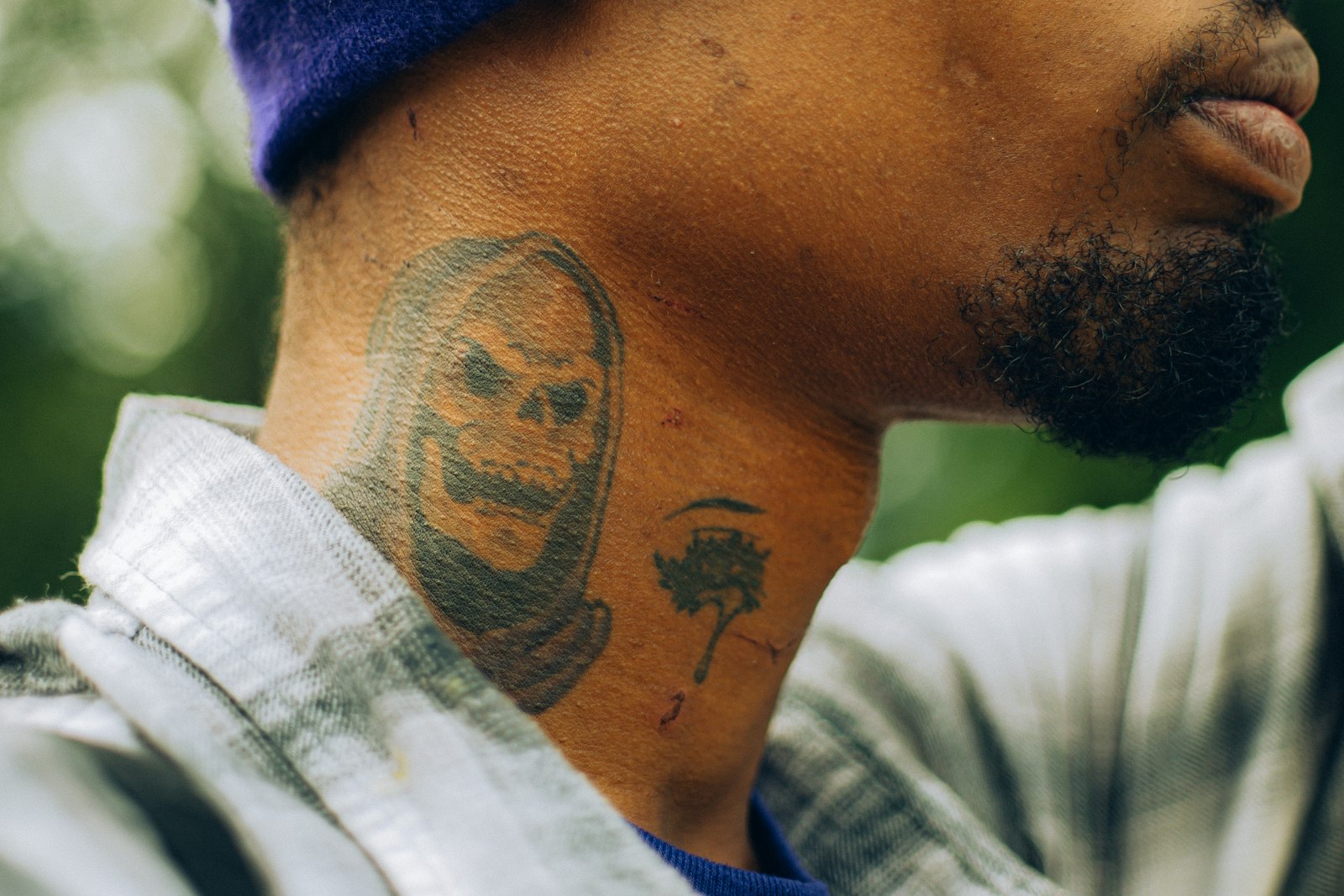
Strip down a linework tattoo to its core and you've got single lines, zero fill, no gradients, no heavy shading. Sounds simple until you actually try it. The technical reality? It demands a rock-solid hand, real understanding of how lines interact in space, and thousands of hours spent learning how ink behaves on human skin. Seattle's tattoo community has embraced linework as the mark of artists who won't cut corners. Here at Cleopatra Ink in Downtown Seattle, every line gets treated like what it is: permanent. This means every millimeter counts. I want to break down what separates a crisp linework piece that reads beautifully for decades from one that turns fuzzy and indistinct.
The Technical Demands of Linework Precision
Linework doesn't forgive sloppy execution the way heavily shaded work sometimes can. A single wobbly line, pressure that fluctuates, or a needle sitting at the wrong depth will torpedo the whole design. The artist has to hold identical pressure across the entire session, react instantly to different skin textures, and know how ink will distribute as the piece heals. This is exactly why minimalist designers and botanical specialists gravitate toward linework. They've burned in the muscle memory to make it look natural but it absolutely doesn't happen by accident. Vee, one of our core artists here, builds her entire practice around this discipline: fine line and botanical work that proves you don't need saturation to make an impact. Every single line exists for a reason. No wasted marks.
5 Things to Check Before Committing to Your Linework Design
- Line weight consistency across the portfolio. Scroll through your artist's past work and zoom in. Do the lines maintain the same thickness throughout each piece? Inconsistent pressure is the loudest tell of inexperience. Ask to see close-up photos, not just social media squares.
- How the artist handles negative space. Linework relies on what's not there. The background, the gaps between lines, the breathing room—these are intentional. A strong linework artist doesn't fill empty space out of nervousness. They trust the design.
- Healing photos, not just fresh shots. Fresh tattoos always look crisp. Request images of healed linework—3-6 months post-session. Some lines blur or fade if the artist worked too shallow; others remain razor-sharp. This tells you everything about their needle control and ink deposit.
- The artist's experience with your specific subject matter. Linework for botanical designs demands different knowledge than linework for geometric or portrait work. If you want fine line flowers, find an artist with a portfolio full of botanical work. If you want minimalist animal silhouettes, choose someone who specializes in that language.
- Their approach to revisions and touch-ups. Linework ages differently than other styles. Some lines may need reinforcement after a year. Before booking, ask about the artist's policy on complimentary touch-ups for faded sections. A confident linework artist stands behind their work.
Cleopatra Ink's Approach to Linework Precision and Sterility
Linework demands equipment that's just as dialed in as the artistry itself. We run hospital-grade sterilization here—every needle, tube, and instrument gets autoclaved to medical standards before it touches skin. This matters more for linework than for heavy color work because even tiny contamination or equipment inconsistency can sabotage line quality. Our artists use calibrated machines with needles specifically selected for consistency, not whatever bulk equipment happens to be cheap.
Vee's built her reputation on fine line and botanical work by refusing to compromise on either equipment or environment. Her setup is hospital-clean, her needle selection is painstaking, and her design consultations zero in on what your skin can sustain for the long haul. I've talked to plenty of people who came to us after getting linework done elsewhere, only to watch their lines thicken or soften during healing. Sometimes you can't see the gap right away. It shows up a few months in. One client told me: "I wanted minimalist botanical work that would look as clean in five years as it did day one. Vee didn't just tattoo me; she explained every decision about line weight and placement for how skin moves. That precision is still there."
Linework Questions Real Clients Ask
Does linework age better than other tattoo styles?
Linework ages exceptionally well if a skilled artist executes it. Because there's no fill or shade to blur together, lines actually sharpen as skin texture normalizes after healing. But if the work is shallow or inconsistent, linework can look faded or broken faster than a solid color piece. Execution quality determines how long it holds up.
Can I get a large piece done in linework, or should it stay small?
Linework scales up perfectly fine. Large botanical pieces, intricate geometric mandalas, and expansive minimalist landscapes all work beautifully. Size isn't the limiting factor. Complexity is. A large piece with too many thin lines crossing each other can become hard to read. Your artist should push back on compositions that don't work. Sometimes less really is more. Check out our gallery to see linework in different sizes.
How long does a linework tattoo session typically take?
Linework usually takes longer than people assume because rushing and precision are incompatible. A medium-sized piece might run 3-4 hours, not because the artist is slow but because consistent line work needs frequent breaks to keep your hand steady. If someone tells you they'll finish detailed linework in 90 minutes, walk away. Good linework cannot be rushed.
Will my linework tattoo hurt more or less than solid color work?
Pain comes down to placement and your own pain tolerance, not the style. Linework does sometimes require slightly slower work or different needle angles than traditional solid pieces. That can feel different but doesn't necessarily hurt more. Your artist will go over this during your consultation.
Linework tattoos are a commitment to minimalism and precision. They belong on people who know that what you leave out often speaks louder than what you put in. We've spent years perfecting this approach across fine line and botanical work at Cleopatra Ink. Ready to design your linework piece? Book a consultation with Vee, and we'll map out how to bring your minimalist vision to life.
For more on fine line design philosophy, check out our guide to fine line tattoos in Seattle. If you're drawn to the intersection of linework and botanical themes, our sketch tattoo styles feature similar precision-driven approaches that might spark your next idea.
Browse our portfolio in the studio gallery for fresh examples, meet our artists to find a stylistic match, or explore the full range of tattoo and piercing services we offer at Cleopatra Ink Seattle.
Explore more guides from our team on the Cleopatra Ink Seattle blog.