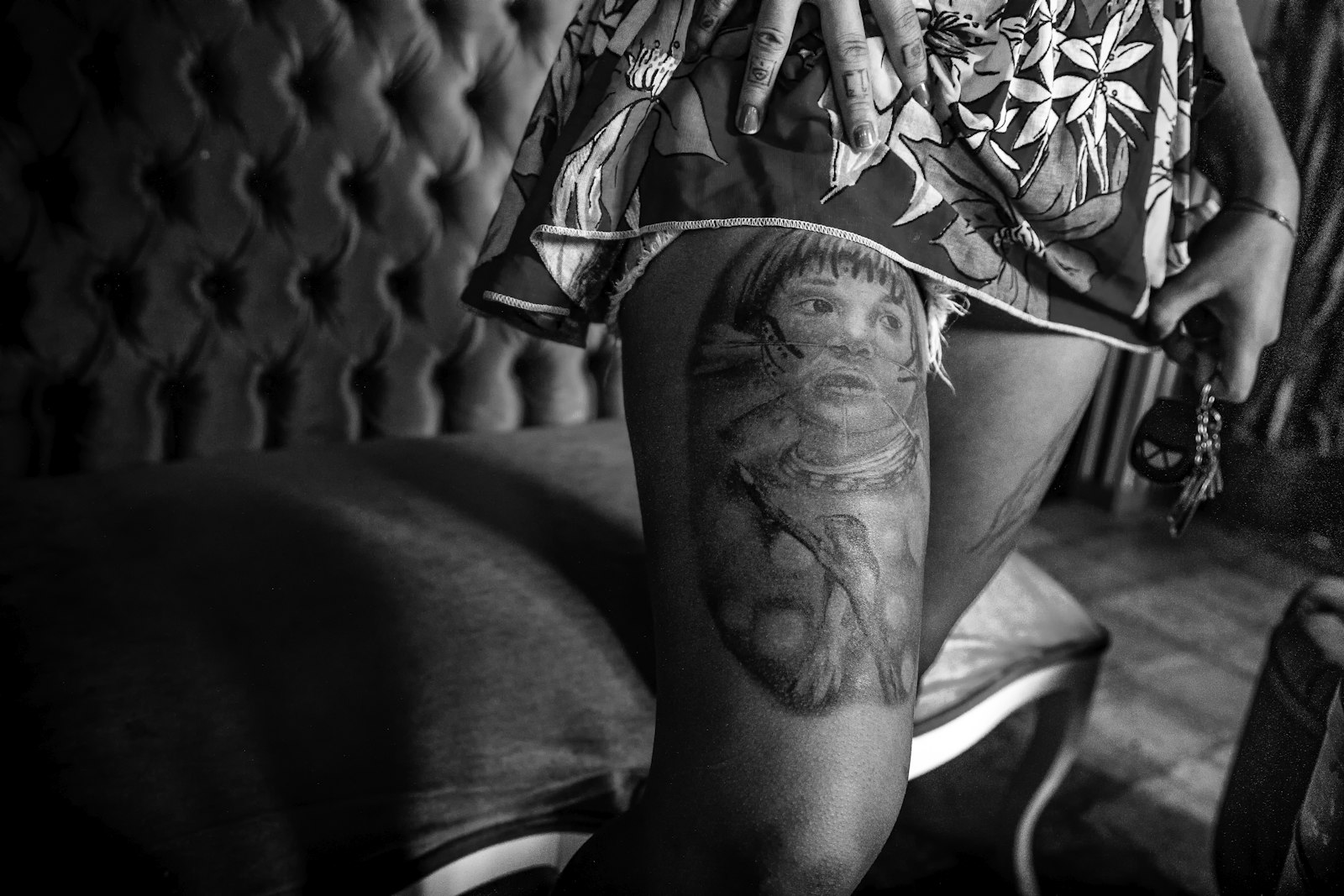
Fine line tattoos occupy a strange and beautiful middle ground in contemporary ink culture. They're not the bold, saturated work of traditional American or blackwork styles. Instead, they're about precision, patience, and the confidence to let empty space speak as loudly as the line itself. You're looking for an artist who understands that less line weight doesn't mean less impact. At Cleopatra Ink, Vee brings that exact philosophy to every design—whether it's a delicate botanical piece wrapping around your wrist or a geometric pattern that catches light differently depending on how you move.
The Architecture of Fine Line Work: Why Precision Matters
Fine line tattoos aren't simply "thin lines." They're a deliberate design language that relies on composition, proportions, and strategic use of white space. A fine line piece might take longer to execute than a bolder style because there's nowhere to hide. Every millimeter counts. The needle pressure, ink saturation, and line consistency determine whether a design reads as intentional and elegant or tentative and unfinished.
This style works exceptionally well for specific design categories: botanical imagery (ferns, wildflowers, root systems), geometric patterns (sacred geometry, minimalist shapes), line portraits, and architectural elements. The restraint of the medium actually amplifies the subject matter. A single botanical stem rendered in fine line can feel more alive than a heavily shaded botanical piece because your eye has room to imagine depth and movement.
At Cleopatra Ink, Vee has spent years developing the hand control and design sensibility that fine line work demands. Shaky hands or inconsistent pressure translate immediately in this style. That's why choosing the right artist isn't optional—it's the entire foundation of your piece.
5 Things to Check Before Committing to Your Fine Line Design
Fine line tattoos require a different vetting process than other styles. Here's what to evaluate before you book:
- Portfolio consistency in line weight. Look at an artist's fine line work across multiple photos. Are the lines consistently thin, or do they vary wildly? Does the line quality degrade in intricate sections? Request to see work up close—healed photos are more revealing than fresh photos, because fresh ink can obscure inconsistencies.
- Experience with your specific subject matter. Fine line artists often specialize. Some excel at botanical designs, others at geometric work, still others at portraiture or architectural pieces. Vee's portfolio leans into botanical minimalism and geometric precision. Match your vision to an artist's proven strengths, not just their overall skill level.
- Understanding of scaling and placement. Fine lines read differently depending on size and body location. An intricate design that works beautifully on your forearm might become a muddy mess on your ankle due to skin texture and size constraints. Your artist should guide you toward placements that honor both the design and your body's canvas.
- Aftercare protocols for fine line work. Fine lines are more vulnerable to blur during healing if you don't follow strict aftercare. Ask your artist what their specific recommendations are. Hospital-grade sterilization is table stakes; what matters here is whether they educate you on keeping fine lines crisp during the crucial healing window.
- Artist willingness to iterate on sketch work. Fine line designs live or die in the sketch phase. A good artist will show you multiple sketch iterations and genuinely incorporate your feedback. This isn't about changing their style—it's about getting proportions and composition locked before needle meets skin.
Vee's Fine Line Process at Cleopatra Ink: Precision Through Practice
Vee's approach to fine line tattoos mirrors how a surgeon approaches microsurgery. The setup matters. At Cleopatra Ink, we use hospital-grade sterilization and precision equipment calibrated for consistent, controlled needle depth. Vee works with fine-tipped needles and maintains steady hand positioning throughout the entire session. This isn't something that translates well to studios cutting corners on equipment or sanitation.
One recent client came in with a vision: a minimalist fern unfurling along her inner bicep, with roots dissolving into geometric linework. Vee spent two consultation sessions refining the composition—adjusting the curve of the fronds, determining exactly where the botanical section would transition into abstraction, and ensuring the line weight stayed consistent as the design wrapped around the curve of the arm. The final piece took five hours, partly because Vee doesn't rush fine line work. Speed is the enemy of precision.
Vee's background in botanical illustration informs every design decision. She understands plant anatomy—how stems taper, how leaves arrange, how root systems branch—in ways that generic tattoo training doesn't guarantee. That expertise becomes visible in the authenticity of the work. Check out Vee's portfolio on our gallery page, and you'll notice the designs don't just look elegant; they look alive.
Fine Line Design Questions You Should Ask
Will my fine line tattoo blur over time?
Not if it's executed and healed properly. Fine lines can appear to blur if the needle depth varies, if healing isn't managed strictly, or if the original design was placed in a high-friction area (like the inner wrist where skin constantly stretches). A well-executed fine line tattoo by a skilled artist like Vee, combined with rigorous aftercare, holds its crispness for years. The key is choosing an artist with proven track record and following their aftercare instructions exactly.
How small can a fine line tattoo realistically be?
Realistically, about one to two inches for designs with legible detail. Smaller than that, and fine lines start to read as a smudge rather than deliberate artwork. If you're drawn to tiny, delicate tattoos, a fine line artist might recommend slightly adjusting scale upward or simplifying the design. This isn't about artistic ego—it's about respecting the medium. A three-inch fine line botanical piece hits a sweet spot between intimate and readable.
Can I combine fine line with other tattoo styles?
Absolutely. Fine line pairs beautifully with black and grey shading (consider checking out our guide on black and grey tattoo designs in Seattle for inspiration), minimalist solid shapes, or even subtle color work. Some artists blend fine line with sketch-style elements to create designs that feel intentionally unfinished or fluid. Vee can discuss hybrid approaches during your consultation if you're imagining something beyond pure fine line.
What's the price range for fine line work?
Fine line tattoos typically run $150–$400+ depending on size, complexity, and session length. A small, simple design might be $150–$250. A larger piece requiring multiple sessions could easily exceed $500. At Cleopatra Ink, pricing is transparent and based on design scope. You're not paying extra for the "minimalist" aesthetic—you're paying for precision craftsmanship and an artist's time and expertise.
Ready to get started on a fine line design? Vee is booking consultations now. We'll start by understanding your aesthetic, evaluating placement options, and sketching multiple iterations until the design feels right. Head over to our booking page to reserve your spot at Cleopatra Ink in Downtown Seattle.
Explore more guides from our team on the Cleopatra Ink Seattle blog.