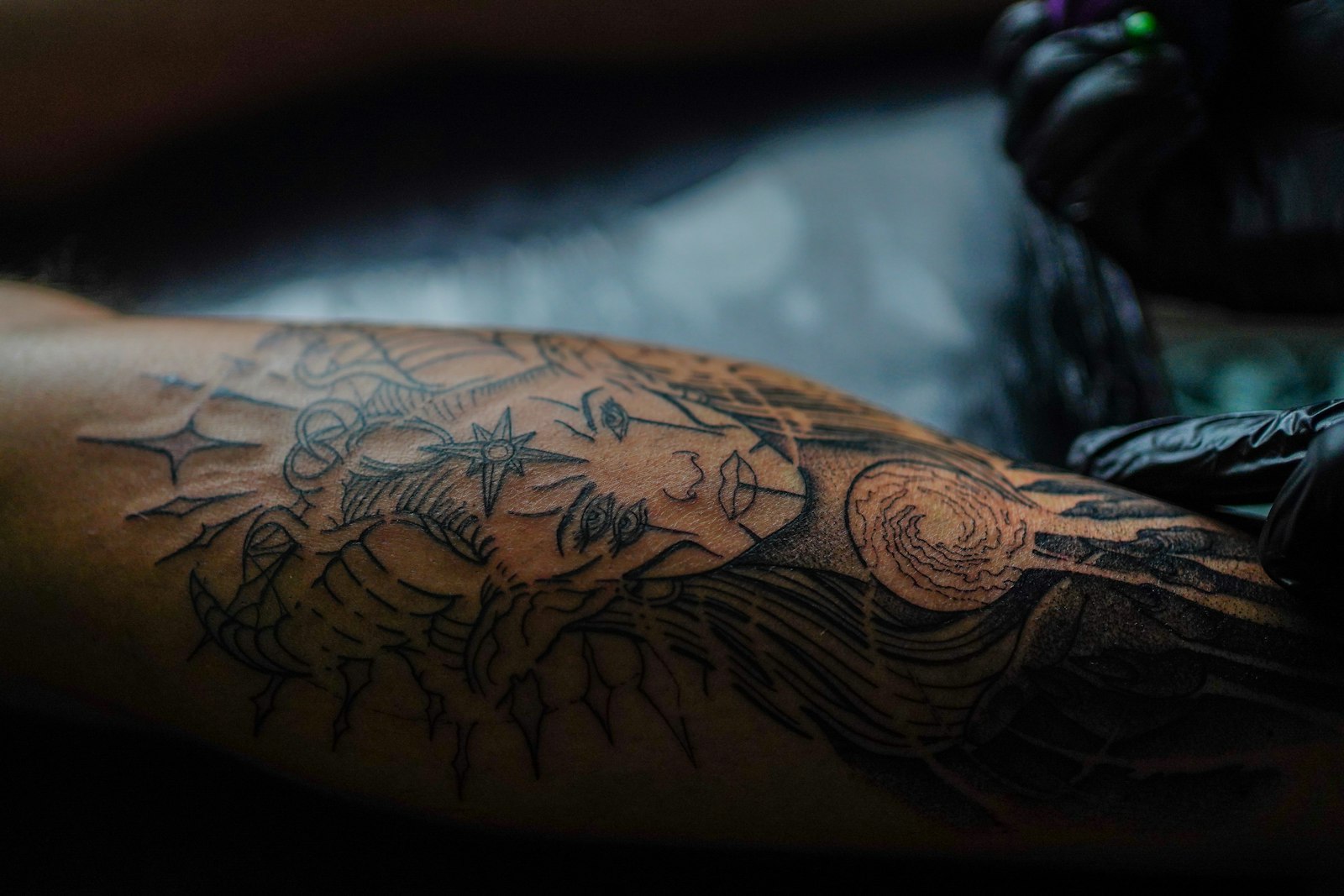
Stippling tattoos are slow, intentional work. Instead of solid lines or filled areas, the artist builds an entire image using thousands of tiny dots—each one placed by hand. That meticulous approach creates depth, shadow, and dimension in ways that flat color or traditional linework just can't match. The technique works for photorealistic portraits, abstract geometry, or anything in between, and the visual texture is genuinely striking once you see it in person.
How Stippling Creates Depth Through Dotwork
The principle is borrowed from pointillism: from a distance, your eye merges all those individual marks into one cohesive image. Up close, you see the actual dot pattern. The artist controls how tightly packed the dots are, how far apart they sit, and how big each one gets. Tight dots = darker areas. Sparse dots = lighter areas. That's how stippling builds dimension without relying on heavy outlines or solid fills.
Stippling works across different styles. Some people want hyper-realistic portraits where the dots mimic photographic detail. Others go abstract or geometric, letting the dotwork itself be the statement. Black and grey is the standard for stippling, though experienced artists can layer different colored dots for subtle chromatic shifts. The technique demands a steady hand, sharp eyesight, and the kind of focus that separates average tattooers from the ones who really know their craft.
5 Things to Check Before Committing to a Stippling Tattoo
- Artist's stippling portfolio depth. Not every good tattoo artist excels at stippling. Look for an artist whose portfolio shows multiple completed stippling pieces—ideally from different categories (portraits, geometric, abstract). Ask how long they've been working with this specific technique. A portrait specialist might not have the geometric precision you need for mandala-style stippling.
- Session duration and pain tolerance match. Stippling sessions run longer than traditional outline work. You're sitting through hundreds of individual needle placements in the same area. Get a realistic time estimate from your artist upfront. If you have a low pain threshold, talk about breaking the piece into multiple shorter sessions rather than one marathon sitting.
- Size and placement suit the technique. Stippling looks best at medium to large scales—roughly 3 inches or bigger. Tiny designs risk having dots blur together as the tattoo ages. Placement matters too: hands, feet, and inner fingers move constantly and experience high friction, which can make stippling blur or fade faster. Chest, back, and arm placements tend to hold up better.
- Healed result expectations with your artist. Stippling changes appearance as it heals and ages. Dots may spread slightly during healing; some might blur together subtly over years. Ask your artist to show you healed examples of their stippling work, not just fresh photos. That's how you get realistic expectations for how your piece will look in six months and five years.
- Touch-up maintenance schedule. Since stippling relies on precise dot placement and density, many artists recommend light touch-ups every few years to keep dots crisp and the overall contrast sharp. Talk about this upfront so you understand the long-term commitment. A stippled piece isn't always a one-and-done appointment.
Why Cleopatra Ink Masters Stippling Precision
At Cleopatra Ink in Downtown Seattle, we treat stippling the same way we approach every technique: with obsessive attention to detail. Kuya Ramon has built serious credibility for his realism and detail work, especially stippled portraits and memorial pieces. The precision required for stippling demands equipment that matches the artist's skill—we use hospital-grade sterilized machines and needles calibrated for consistent dot depth and spacing. There's no margin for error when the entire piece depends on the placement of thousands of individual marks.
Sterility is non-negotiable for stippling work. The technique involves so many individual needle placements over extended sessions that proper needle grouping and machine settings are critical for both safety and final appearance. We only use single-use, individually packaged needles and autoclave-sterilized equipment. One client recently described their stippling portrait session with Kuya Ramon as "meditative"—the quiet focus in the room, the rhythmic needle work, the artist's absolute concentration on each dot. That's the environment that produces exceptional stippling work.
Stippling Questions Answered
How long does a typical stippling tattoo session take?
Session length depends entirely on size, density, and detail level. A small geometric stippled piece might take 2–3 hours. A larger portrait or complex abstract design could require 4–6+ hours across multiple sessions. Your artist should give you a realistic time estimate during consultation. Stippling isn't rushed work.
Does stippling hurt more than regular tattoos?
Stippling involves more total needle placements than solid-fill work, but the needle depth and force aren't necessarily different. Many clients report stippling feels slightly less intense than dense traditional shading because the rhythm of individual dots becomes almost meditative. Pain experience varies person to person—talk about your concerns with your artist beforehand.
How does stippling age compared to other tattoo styles?
Stippling pieces age well if placed strategically and properly maintained. High-friction areas may blur faster. Areas with less movement (back, chest, outer arm) retain clarity longer. Black and grey stippling typically holds up better than color stippling long-term, though both can fade. Touch-ups every 3–5 years keep pieces looking fresh.
Can stippling work for color tattoos?
Yes, though it's less common than black and grey stippling. Skilled artists can layer colored dots to create subtle gradations and photorealistic effects. Color stippling requires even more precision and planning because color mixing happens optically—your eye blends the dots. It's an advanced technique, so find an artist with specific color stippling experience.
Ready to get a stippling tattoo at Cleopatra Ink in Seattle? Book a consultation with one of our artists. We'll discuss your vision, placement, size, and the realistic timeline for bringing your stippled design to life. You can also check out our other detailed work—like black and grey tattoo styles and fine-line botanical pieces—to see the range of precision our team brings to every project.
Browse our portfolio in the studio gallery for fresh examples, meet our artists to find a stylistic match, or explore the full range of tattoo and piercing services we offer at Cleopatra Ink Seattle.
Explore more guides from our team on the Cleopatra Ink Seattle blog.