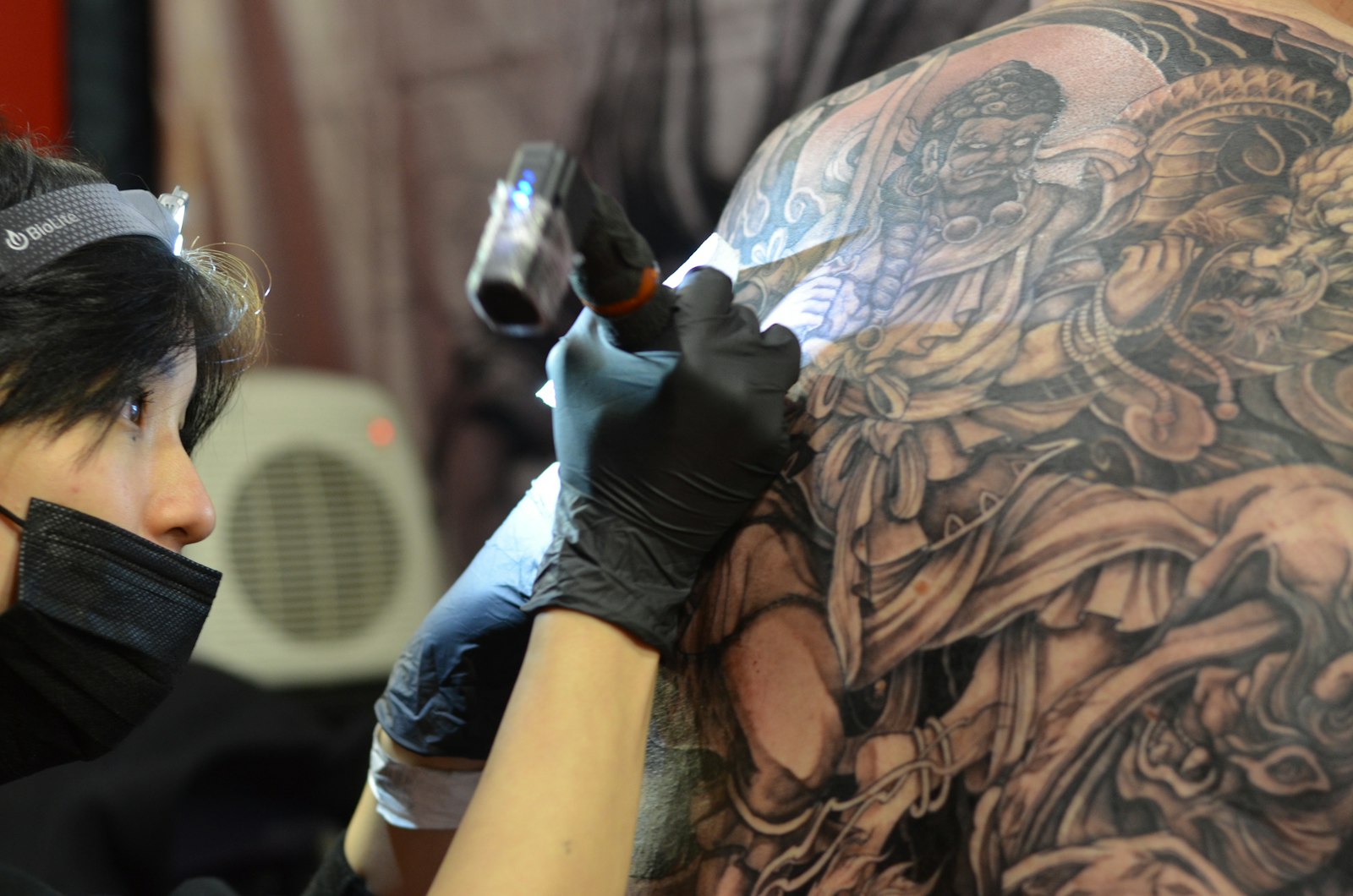
Horror tattoos in Seattle are serious business. They're not about shock value—they're visual storytelling that demands technical precision, tonal mastery, and real conceptual depth. You might be drawn to classic monsters, surreal nightmares, or occult symbolism. Horror work requires an artist who gets both the psychology of darkness and how to render it permanently on skin. At Cleopatra Ink in Downtown Seattle, we've spent years building our reputation by respecting the craft behind every genre, including horror. Our artists know that fear, executed with skill and intention, becomes art that actually lasts.
What Makes Horror Tattoo Design Unique in Seattle's Tattoo Scene
Horror tattoos operate on a different technical and emotional frequency than other styles. Take botanical tattoo work, which celebrates light and organic flow. Horror does the opposite—it's built on contrast, shadow, and negative space to communicate dread. The best horror pieces don't scream. They whisper. A skeletal face, a haunted landscape, or a creature mid-transformation gains power through restraint and precise detail placement.
Seattle's always been into darker aesthetics. Grunge heritage, the perpetual rain, the creative community—it all creates natural soil for horror imagery. What separates good work from forgettable shock tattoos is finding an artist who doesn't just draw monsters. They understand how to compose them on actual human anatomy, how to use blackwork depth to suggest three dimensions, and how to make people actually stop and stare. That's experience talking.
Five Things to Verify Before Getting a Horror Tattoo
Horror work punishes mistakes. A poorly rendered demon or a muddy grave scene haunts you the wrong way. Before you commit, check these specifics:
- Portfolio depth in darkness. Don't just scan their Instagram. Ask to see full horror pieces—not cherry-picked single shots. Study how they handle shadow transitions, how they maintain line weight across high-contrast areas, and whether detail deteriorates in darker sections. Horror tattoos live or die by tonal control.
- Experience with anatomical horror. Anatomical horror—grotesque bodies, twisted limbs, exposed organs—is a subset that demands precision. If your vision involves distorted human form, ask specifically if the artist has rendered that successfully. It's different from portrait work or creature design.
- Understanding of symbolism and narrative. The best horror tattoos carry weight because they reference something real—historical mythology, folklore, personal loss, or psychological truth. Ask your artist how they'd approach the *meaning* behind your design, not just the visual execution.
- Placement consultation for visual impact. Horror gains power through context. A creature on the chest reads differently than the same creature on the forearm. Does your artist discuss how body placement affects how the tattoo will be seen—up close, from distance, clothed or exposed? This matters.
- Long-term ink quality assurance. Horror tattoos use heavy blacks and detailed greywork, both of which demand pigment quality and skin compatibility. Ask about their ink suppliers, healing protocols specific to dark work, and how they ensure pieces won't blur or muddy after years of fading.
Why Cleopatra Ink's Approach to Horror Tattoos Stands Apart
Our studio's in Downtown Seattle with a 4.9-star rating across 1,300+ reviews. We're not the loudest shop in the city. We deliver technical excellence paired with genuine creative partnership.
Kuya Ramon specializes in realism and blackwork, the twin foundations of serious horror tattoos. His portfolio covers grotesque creature design, memorial pieces with dark symbolism, and hyper-realistic portraits that carry actual emotional weight. He treats each horror piece as a narrative problem. What story does this tattoo tell? How does it sit on *your* body? What inks and techniques keep it crisp for decades? He's not theorizing—he asks these questions at every consultation.
We operate at hospital-grade sterile standards. Horror tattoos demand precision, which means steady hands and zero tolerance for infection. We use autoclave-sterilized equipment, single-use needles, and inks sourced specifically for longevity in dark work. One client came in wanting a piece inspired by Goya's *Black Paintings*. Atmospheric, psychologically dense horror without literal monsters. Kuya spent two consultations mapping how shadow gradients would interact with skin tone, ensuring the piece would read as intended even as it naturally faded over time.
Horror work isn't frivolous to us. Many clients choose dark imagery because it carries personal meaning—loss, survival, reclaiming fear as power. We create space for that conversation. Not as therapists, but as artists who respect both the craft and the human wearing it.
Horror Tattoo Design Questions We Hear in Seattle
Do horror tattoos fade faster than other styles?
Not inherently. But they're less forgiving of fading. A botanical or abstract piece can soften over time and stay beautiful. Horror work, especially detailed monster design or anatomical pieces, loses impact if blacks muddy or greys blur together. This is why pigment quality and artist skill matter so much. We prioritize inks that maintain crisp blacks for 5, 10, 15+ years because that's what horror imagery demands.
What's the difference between horror and blackwork tattoos?
Blackwork is a technique—solid blacks, graphic shapes, high contrast. Horror is a subject matter. Some horror tattoos use blackwork techniques to devastating effect. Others blend horror imagery with black and grey shading for atmospheric depth. The best choice depends on your specific design and the mood you're after.
Are there horror designs that won't look dated in five years?
Absolutely, if you focus on iconic imagery over trendy references. A classic skull, a haunted landscape, folklore-based creatures—these stay visually powerful because they're rooted in genuine mythology and artistic tradition. Skip designs that rely on current meme culture or celebrity references. The strongest horror work pulls from Goya, Dali, H.R. Giger, or historical folklore—sources that have endured for decades.
Can you do custom horror designs or should I bring reference images?
Both work. Reference images help communicate style and tone. But the strongest horror pieces often come from artist-led design. Kuya and our team can create original compositions based on your concept—a specific fear, a personal story, or a mood you want to capture. We'll sketch concepts, refine them through consultation, and build something genuinely yours, not a copy of someone else's nightmare.
Ready to explore horror tattoo design with artists who understand both the darkness and the discipline required? Book a consultation at Cleopatra Ink. We're in Downtown Seattle and ready to listen to your vision.
Browse our portfolio in the studio gallery for fresh examples, meet our artists to find a stylistic match, or explore the full range of tattoo and piercing services we offer at Cleopatra Ink Seattle.
Explore more guides from our team on the Cleopatra Ink Seattle blog.