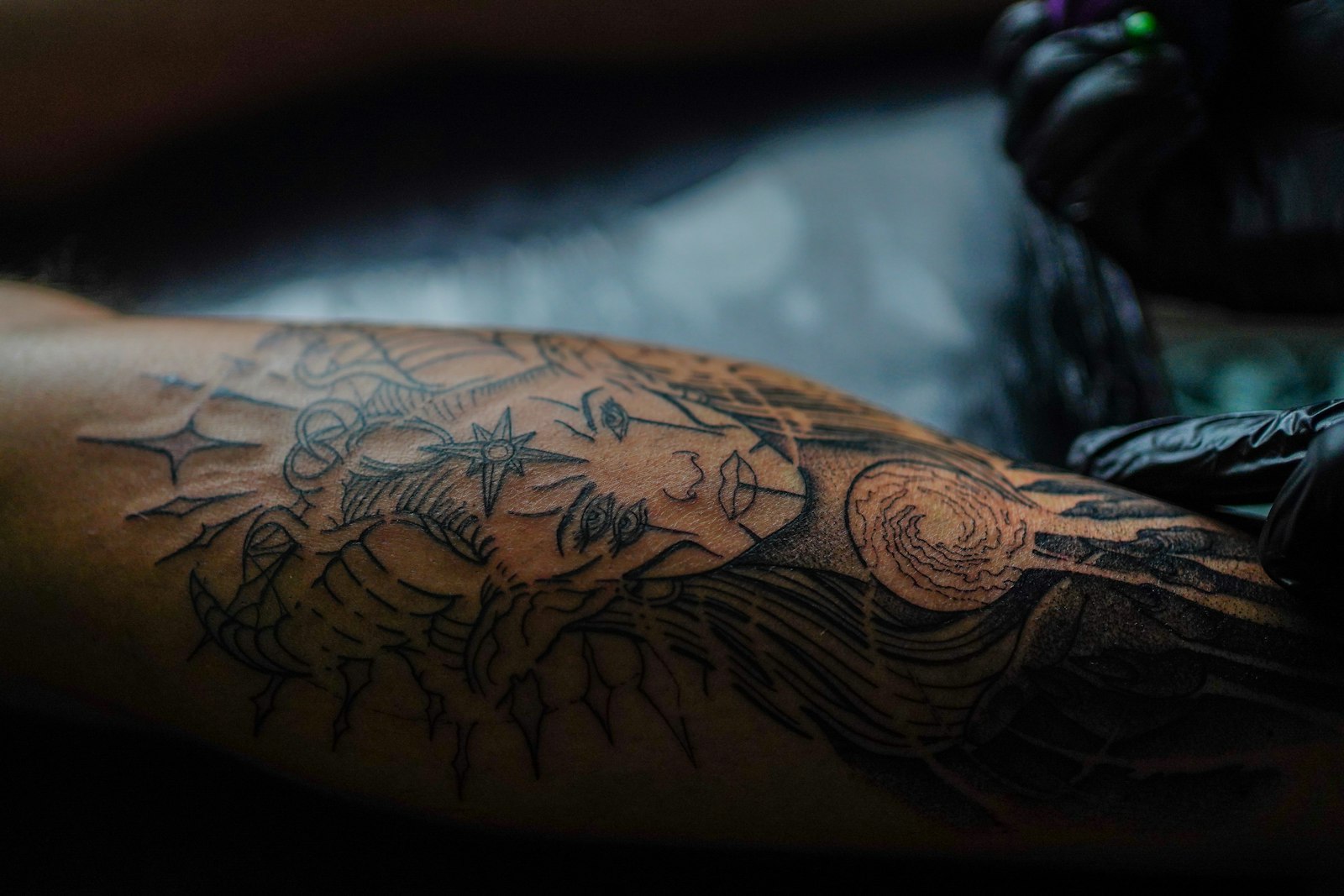
Floral tattoos carry real meaning—they're not just something pretty to put on your skin. Maybe you're picturing a single delicate bloom, an entire garden wrapped around your arm, or wildflowers scattered across your shoulder. Flower designs work in minimalist fine line, bold blackwork, or photorealistic color. Here in Seattle, where the rain keeps everything green and nature surrounds us, floral tattoos fit naturally into the landscape. At Cleopatra Ink, we've spent fifteen years learning what makes a rose actually move people instead of just sitting there looking generic.
Why Floral Designs Resonate in Seattle's Tattoo Culture
This city's relationship with nature goes beyond casual appreciation. Pike Place Market's flower stalls, the evergreen forests, the rain—it all shapes how Seattle clients think about floral tattoos. They choose them for real reasons. A cherry blossom might mark a specific spring. A wildflower represents survival through hard seasons. The botanical tradition here comes from our landscape and the quiet act of choosing living imagery over hard geometric lines.
Florals also move easily between styles. Fine line minimalism, bold blackwork, photorealistic color—pick any of these and you get a completely different piece. That flexibility is why we see floral work thriving year-round in our studio, across every age group. They hold up because the appeal stays constant: beauty grounded in actual nature.
5 Things to Check Before Committing to a Floral Tattoo Design
- Verify the artist's botanical accuracy. Not every tattoo artist understands how plants actually grow. A solid design respects real plant proportions—petals, stems, leaves—instead of inventing fantasy versions. When you talk with your artist, ask them to show you reference work of actual flowers they've tattooed. Vee at Cleopatra Ink researches each flower's anatomy to keep designs authentic rather than stylized into something unrecognizable.
- Confirm the line weight strategy for longevity. Ultra-fine lines blur over time, especially in delicate petals. Your artist needs to explain how they're scaling line weight so your piece stays sharp at the five-year mark and beyond. This conversation separates rushed consultations from thoughtful ones.
- Discuss color versus black and grey placement. Color florals fade at different rates—reds go fastest, blacks and greens stick around longer. If you're going black and grey, some botanical pieces shine in monochrome while others lose punch. Your artist should advise based on the actual flowers you've chosen, not generic ideas.
- Ask about negative space and composition balance. A single stem reads differently than a scattered bouquet. Your artist should explain how they're balancing the design against your body's actual curves. Skip this conversation and you risk a composition that looks great flat but feels cramped on your ribs or leg.
- Request a detailed mockup on your actual body location. Professional artists at studios like ours show you the design scaled and positioned exactly where it'll live. This isn't optional. You need to see how your floral piece actually sits on your body before any needle work happens.
Floral Tattoos at Cleopatra Ink: Precision, Sterilization, and Artist Specialization
Floral work demands precision, which demands the right equipment and processes. At Cleopatra Ink, we use hospital-grade sterilization for every needle, tube, and tool. Our autoclave gets checked and logged daily. Not paranoia—just respect for your skin. We're downtown Seattle in full compliance with Washington State health codes. Every artist here has bloodborne pathogen certification and keeps training current.
Vee handles our fine line and botanical work. Her background in botanical illustration—actual plant drawing, not just tattoo school—means she knows how to translate living organisms into permanent lines. Clients describe working with Vee as collaborative: she asks why you chose certain flowers, what they mean to you, how you want them to feel. That prep work before the stencil goes down separates a tattoo from your tattoo.
Recently a client came in wanting a memorial piece centered on wildflowers from her grandmother's garden. Vee didn't default to generic botanicals. Instead she researched the specific plant varieties from that region, found proper reference images, and built a composition that read like a love letter to that place and person. That's the detail work transforming floral designs from pleasant to genuinely meaningful.
Common Questions About Floral Tattoo Design and Care
Do floral tattoos work better in color or black and grey?
Both look great. The choice depends on what you want to express. Black and grey florals feel timeless and graphic, aging predictably. Color pops right away but pigments fade at different speeds—greens and blacks hold steady, reds and yellows don't. Unsure? Your artist can mock up both versions and you'll feel which one clicks. Many people gravitate toward botanical designs in black and grey for their elegant restraint.
How do I prevent my floral tattoo from blurring over time?
Three things matter: your artist's line weight skill, your aftercare during healing, and sun protection long-term. Work with an artist who understands that fine florals need slightly thicker lines in the actual tattoo than they appear in sketches, because skin healing softens edges. Follow your artist's aftercare instructions exactly for the first two weeks. Use SPF 30+ sunscreen on the piece for the first year and regularly after. Protected floral work stays crisp for decades.
Can I add to a floral tattoo later, or design it with expansion in mind?
Absolutely. Many clients start with one flower and build into a full composition over time. Tell your artist this upfront so they design with breathing room and composition that allows growth. This is where experienced botanical tattoo artists in Seattle matter—they understand how to create pieces that feel complete now but can expand later.
What's the difference between a floral tattoo and botanical tattoo?
Floral tattoos emphasize beauty and symbolism. Botanical tattoos emphasize anatomical accuracy and plant structure. The lines blur. At Cleopatra Ink, we blend both approaches so your flowers are beautiful and botanically honest. Some clients want loose artistic interpretations, others want near-photographic accuracy. Both work. What matters is saying what you actually want during the consultation.
Explore Related Floral and Nature-Inspired Styles
Floral work connects to other nature-centered approaches. Black and grey tattoos create solid foundations for botanical precision, while abstract designs can weave floral elements into looser, more conceptual compositions. Many clients find mixing styles—fine line florals with subtle abstract touches—creates something distinctly theirs.
Floral tattoos at Cleopatra Ink aren't trend pieces. They're about finding the right artist, the right flowers, and the right moment to make them permanent. Vee's botanical expertise paired with our studio's sterilization standards means your floral piece looks exactly right the day you walk out and ages beautifully for life.
Ready to design your floral tattoo? Book a consultation with Vee or another artist at Cleopatra Ink, and let's create something as unique as the flowers that inspired it.
Browse our portfolio in the studio gallery for fresh examples, meet our artists to find a stylistic match, or explore the full range of tattoo and piercing services we offer at Cleopatra Ink Seattle.
Explore more guides from our team on the Cleopatra Ink Seattle blog.