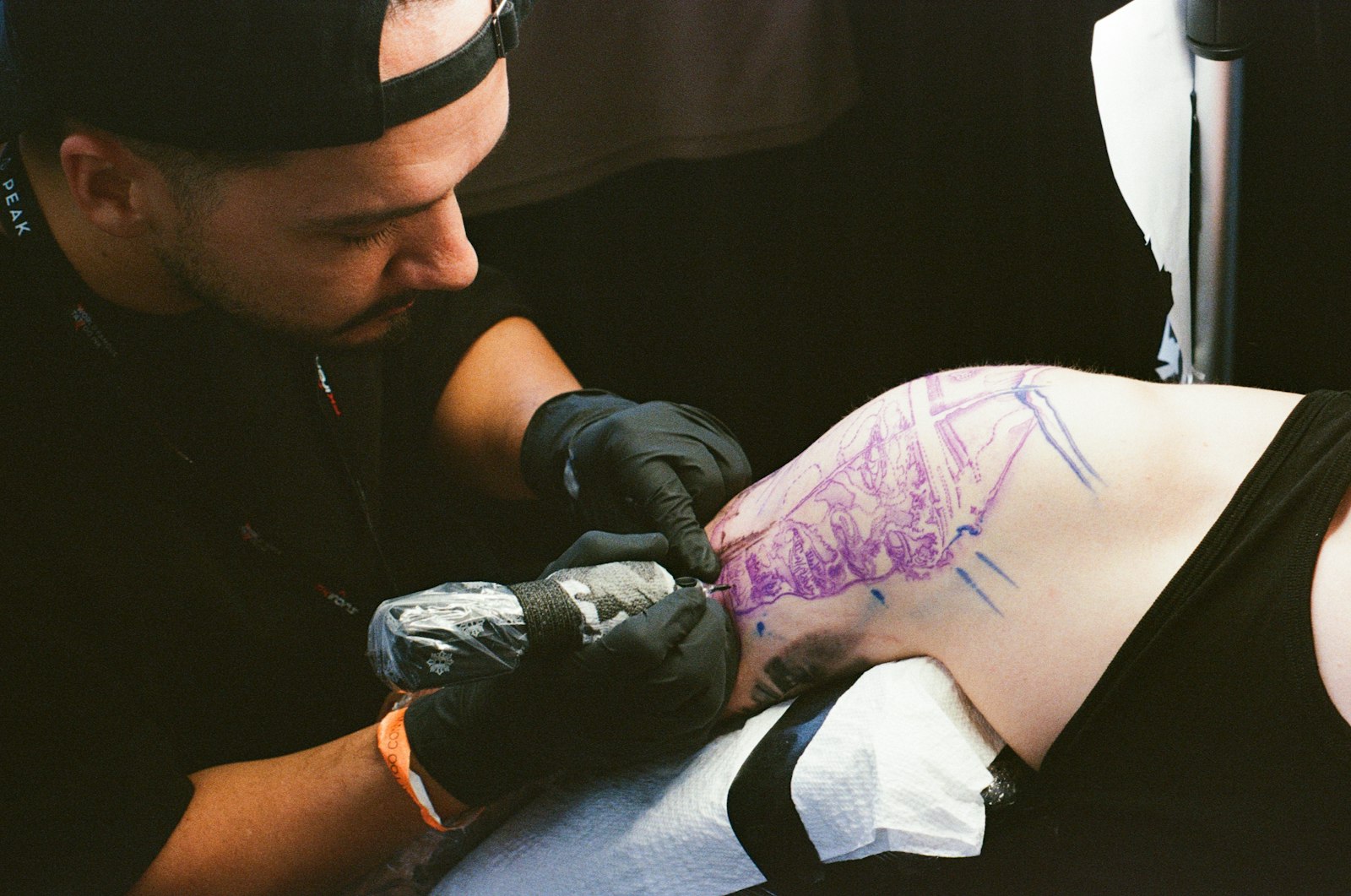
That old tattoo sitting on your skin? Yeah, I get it. You're not alone. But here's the thing—a real cover up isn't about erasing. It's about redesigning. I've spent fifteen years in Seattle shops, and cover up work is where the actual artistry happens. It's not like tattooing fresh skin where you start from scratch. You're layering against existing pigment, working with density and shadow, turning something you regret into something you'll actually want to show people. At Cleopatra Ink Downtown, that's exactly what we do.
Why Cover Ups Demand Different Expertise Than Fresh Tattoos
Cover up tattooing is a completely different animal. Fresh skin is blank canvas—you build whatever you want from zero. But old ink? That's already settled into the dermis, usually unevenly faded or blurry. The old tattoo doesn't vanish. It becomes part of your new design's foundation. Real cover up artists understand the physics: which colors kill old pigment, how to use solid blacks and shadow to hide what's underneath, which designs actually work versus which ones just make everything darker and muddied.
Not every good tattoo artist is a good cover up artist. I know portrait specialists who can't handle the opacity requirements. Minimalist artists comfortable with clean lines often lack experience with the bold, dense work cover ups need. Kuya Ramon, one of our main artists here, excels at cover ups because his realism and blackwork skills were built around exactly these constraints. He thinks in layers.
Five Critical Details to Assess Before Booking Your Cover Up
- Does the artist have a dedicated cover up portfolio? Don't just ask if they do cover ups. Ask to see real before-and-afters. Legitimate cover ups show the old tattoo visible in the "before" photo and completely integrated into the new design in the "after." If someone can't pull up actual examples, they don't have the track record you need.
- Can they explain their strategy for YOUR specific old tattoo? A solid cover up artist doesn't start by showing you flash designs they want to draw. They analyze your existing ink—color, density, location, size—and map out a strategy before touching the gun. They should discuss whether they'll use blackwork density, color layering, or a mix. If they jump straight to design pictures, they're not thinking like a cover up specialist.
- Are they honest about what's actually possible? Some old tattoos can't be fully covered in one session. If yours is large, light, or really colorful, a real cover up artist will tell you upfront that it might take two sessions, a bigger design, or specific placement. Anyone promising a perfect one-session miracle is lying to you.
- Do they get the "bigger and darker" reality? Cover ups almost always need more space than the original piece. Want to cover a 2-inch tattoo? Expect the new design to be 3-4 inches minimum. Ask yourself if that expansion works for your body before you book.
- Is the studio hospital-grade sterile? Cover ups still involve breaking skin. Check for autoclave certification, single-use needle protocols, and high-quality sterile inks. We run full sterilization at Cleopatra Ink—every cover up follows the exact same hospital-standard procedures as a fresh tattoo.
Why Cleopatra Ink Excels at Seattle Cover Up Work
Cover ups succeed or fail based on artist skill and studio standards. Kuya Ramon built his entire reputation on realism and blackwork, which means he's spent years solving exactly these kinds of technical problems. He doesn't treat a cover up as just another tattoo. He treats it as a puzzle: analyzing old ink density, proposing solutions, executing with the precision and bold lines the work demands.
The studio itself matters. We operate at hospital-grade sterilization standards—autoclave equipment, single-use sterile needles, inks sourced to medical spec. Cover ups need this rigor because they fight embedded pigment and often require multiple passes and heavier density. The risk of contamination goes up with session intensity and duration. When Kuya works on a cover up, every tool and needle and surface meets surgical standards.
I've watched results compound over years. One client came in with a dull, misaligned piece from another artist—totally unfixable using normal methods. Kuya proposed a larger botanical blackwork design that would integrate the old ink as shadow and negative space. Six weeks of healing later, the client loved it enough to post it everywhere. That's not luck. That's experience, real strategy, and the willingness to do harder technical work.
Cover Up Questions Artists in Seattle Hear (and What You Should Know)
Can a cover up completely hide an old tattoo?
Mostly, yes. Light and small? A skilled artist makes it disappear. Large, bright, or dense? The goal becomes integration—making it part of the new design's visual story instead of something hiding underneath. The best cover ups succeed because the new work is so good you forget the old one ever existed.
How much larger does the new tattoo need to be?
Figure 30-50% bigger footprint. A 2-inch piece needs 3 inches. A 4-inch piece needs 5-6 inches. This isn't random. More space means more room to layer, add density, and use shadow and detail to hide the old work completely. Cramming a cover up into a small space almost always leaves a ghost of the old piece showing through.
Can I cover it in one session?
Small and faded? Usually yes. Large or dark? Often needs two sessions spaced 6-8 weeks apart to let everything heal and show how the old ink responds to new layering. Your artist should give you an honest timeline during the consultation.
What if I hate the cover up?
This is why the design phase before needles touch skin is everything. A good cover up artist shows mockups, discusses proportions, makes sure you love the strategy. That collaboration at Cleopatra Ink isn't an add-on—it's where the whole thing gets done right.
Ready to turn that regretted tattoo into something you'll actually love? Book a cover up consultation with Cleopatra Ink. Kuya Ramon's portfolio proves what's possible, and our sterile professional environment guarantees gallery-quality results. Check out how we approach black and grey design work, which forms the backbone of most cover up strategy, or read about what sets award-winning Seattle artists apart in their craft.
Meet the full team on the artists page, browse recent work in the gallery, and see which services each artist specializes in.
More pieces from our team are available on the Cleopatra Ink Seattle blog.