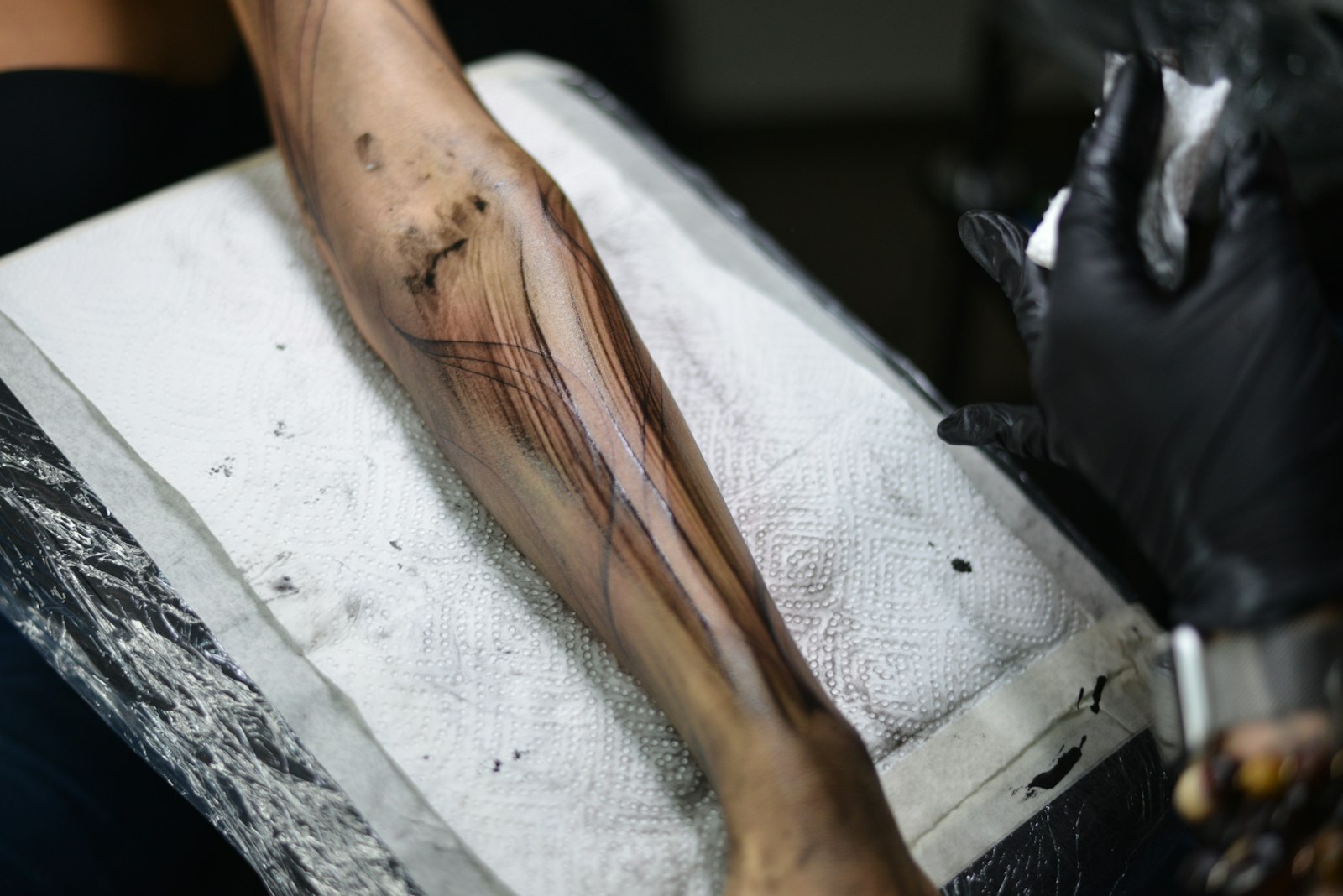
Calligraphic tattoo designs are way more than just ink on skin. They're a serious conversation between handwriting as art and whatever you're committing to permanently. Some people come in wanting flowing script, others are drawn to ancient letterforms or personalized calligraphy that honors a name or philosophy. A good calligraphic piece needs both technical mastery and real artistic vision. At Cleopatra Ink Downtown Seattle, we build fine line work that turns letters into something sculptural. Our artists understand that negative space, stroke weight, and letter proportion are what separate a piece that sings from one that falls flat.
The Precision Behind Flowing Script Work
Calligraphic tattoos live in a completely different technical world. Bold American traditional lettering or thick blackwork can handle some forgiveness. Script work can't. You're dealing with thick strokes that thin into hairlines, consistent letterform angles, and the rhythm that spacing creates between characters. The artist has to keep their hand pressure steady, know how ink spreads across skin during healing, and picture how a curve that looks perfect on paper will actually read when it's scaled to your forearm or chest.
Vee handles our fine line and minimalist work—the foundation that every calligraphic tattoo depends on. The real difference between a script piece that ages beautifully and one that blurs into nothing comes down to understanding ink density, needle depth, and how the artist executes consistent line weight across multiple letters. Script work is unforgiving. Even a 0.5mm mistake becomes obvious. This is exactly why artist choice matters more for calligraphy than it does for heavier styles.
5 Things to Verify Before Committing to Calligraphic Script Work
- Review their script portfolio specifically. Don't assume an artist who excels at portraits or bold linework can execute flowing calligraphy. Look for consistency in letterform—do the artists' past pieces maintain uniform stroke angles? Do the scripts look intentional or shaky? Scroll past their general portfolio and search for fine line lettering examples only.
- Confirm they hand-draw custom script mockups. A reputable calligraphic tattoo artist will sketch your custom design by hand, not use a digital font converter or pull generic script from reference images. Custom lettering ensures your piece isn't identical to someone else's tattoo walking around Capitol Hill.
- Ask about ink viscosity and needle selection. Calligraphic work requires thinner ink and often single-needle or very tight liner configurations to maintain delicate line work. A casual artist might not adjust their setup. Your artist should be able to explain their needle choice and ink density without hesitation.
- Clarify how they handle language and transliteration. If you're getting Arabic, Sanskrit, Hebrew, or another script, verify the artist has experience with that language's letterforms and doesn't rely solely on client reference images. Incorrect transliteration or letterform can undermine the entire piece.
- Discuss placement and skin texture carefully. Fine line calligraphy ages differently on different body areas. Areas with constant movement (fingers, joints, palms) cause fine lines to blur faster than static areas (ribs, upper back, shoulder). A knowledgeable artist will recommend placement that works with your skin's natural movement and sun exposure.
Calligraphic Precision at Cleopatra Ink
Our approach to calligraphic tattoos at Cleopatra Ink Downtown Seattle starts with what the work actually means to you. Every client gets a custom hand-drawn mockup. No digital shortcuts. No generic fonts. Vee uses hospital-grade sterile single-needle and tight liner configurations specifically set up for script. We source inks for longevity and use thinner viscosity formulations that give you the stroke variation calligraphy needs without the bleeding that destroys delicate lettering.
Our Egyptian-inspired space naturally works for script. There's something that just lands when you're creating fine letterforms in a studio that celebrates written language and ancient symbol. We've done hundreds of calligraphic pieces for Seattle clients—personal names in custom script, philosophical phrases in classical letterforms. One client brought us a hand-written sample of her late grandmother's handwriting. We translated that personal script into a forearm piece. Now she carries her grandmother forward every day. That's the kind of intimate, precise work calligraphy really is.
Sterilization matters more here than you might think. Fine line work means the needle stays close to the surface, so any infection risk damages the healing. We follow hospital protocols: single-use sterile needle packages opened in front of every client, autoclave-sterilized equipment, and aftercare instructions built specifically for fine line healing.
Common Questions About Calligraphic Tattoo Design
How long does a calligraphic tattoo take compared to other styles?
Fine line script takes longer than most people expect. A three-word phrase runs 90 minutes to two hours. Heavy lettering might finish in 30. The precision required—keeping stroke consistency, managing ink saturation, avoiding tool marks—means you can't rush it. Rushed calligraphy shows.
Will my fine line script tattoo blur over time?
Not if it's done right and healed right. The idea that all fine line work blurs comes from bad execution. A skilled artist using the right needle configuration, ink viscosity, and depth gets clarity that lasts for decades. Sun protection and proper moisturizing during those critical first two weeks make a real difference.
Can you incorporate calligraphic script into other styles?
Completely. Calligraphic lettering pairs beautifully with botanical designs, blackwork elements, and minimalist work. Some clients layer script with subtle line work below. The key is making sure your artist knows how to balance fine lettering with surrounding elements so nothing drowns anything else out.
What languages work best for calligraphic tattoos?
Any language with a real script tradition works—English in various calligraphic hands, Arabic, Latin, Sanskrit, Hebrew, Chinese characters. Pick based on linguistic meaning and how beautiful the letterforms actually are. A skilled artist will help you choose a script style that respects both your words and the visual composition.
Calligraphic tattoos demand something different: patience, precision, and working with an artist who gets that letterforms are art. At Cleopatra Ink Seattle, we have the chops and experience to turn your words into calligraphy you'll wear. Book a consultation with Vee to talk through your custom script design and see how calligraphic work can express your intention.
Check out our portfolio in the studio gallery, meet our artists to find someone whose work clicks with you, or explore the full range of tattoo and piercing services we offer at Cleopatra Ink Seattle.
Read more guides on the Cleopatra Ink Seattle blog.