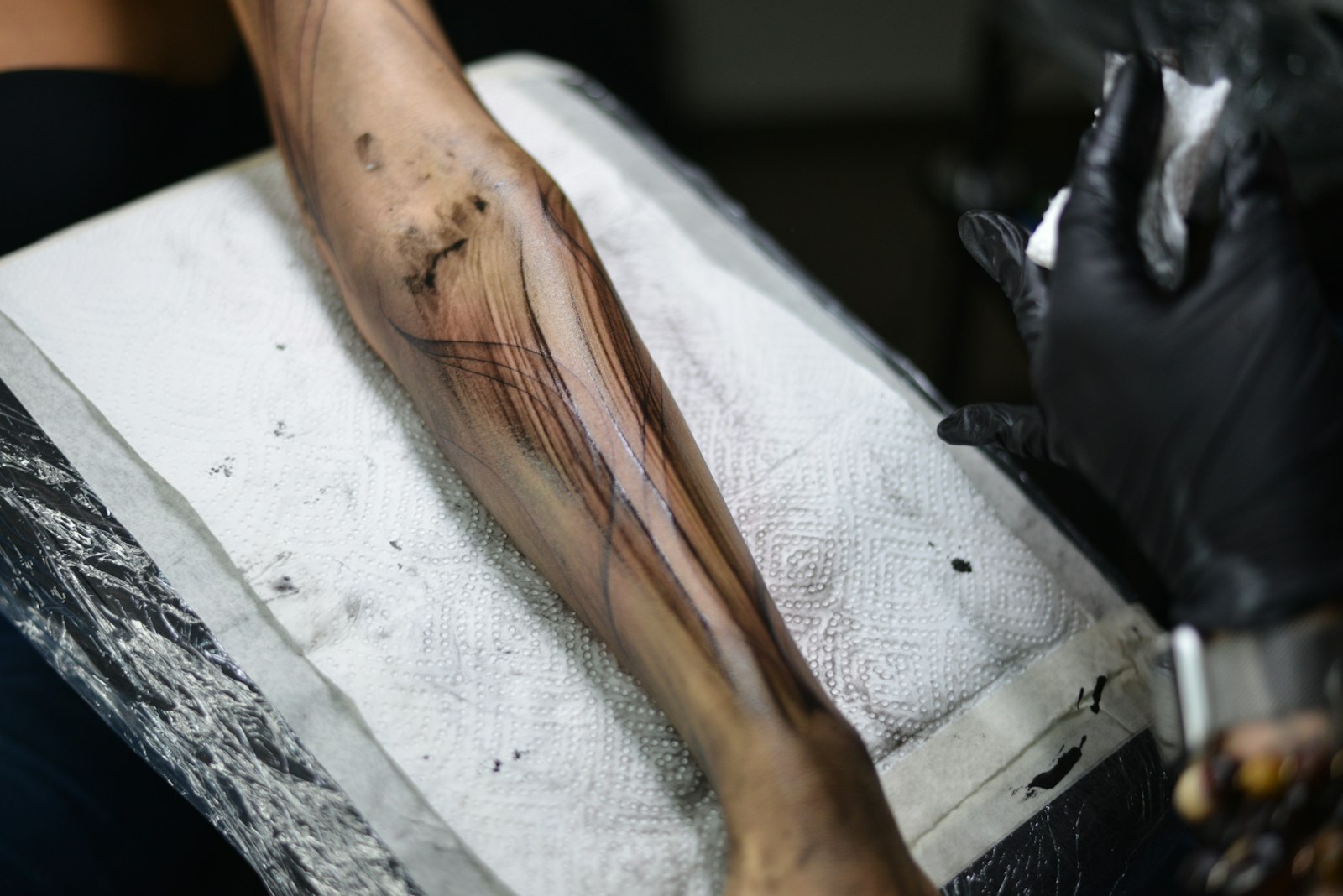
Biomechanical tattoos exist in that strange, compelling space where flesh meets machine. Gears push through skin. Pistons emerge from muscle. Circuit boards replace veins. It's a style that separates the casual artist from the technically obsessed—you need someone who can render depth, shadow, and industrial components with absolute precision. In Seattle, this work has become increasingly popular among clients who want their tattoos to visualize something deeper: the blurred line between human and mechanical, natural and constructed. Before you sit down in the chair, you should know exactly what makes a biomechanical piece sing versus what makes it fall flat.
The Technical Demands of Biomechanical Design
Biomechanical isn't just slapping gears onto skin and calling it done. This style demands real mastery of perspective, shadow, and how mechanical parts interact with your body's actual curves and contours. The illusion only works if machinery appears to exist beneath your skin, not merely painted across the surface. That takes line work, layered shading, and intelligent placement. Most biomechanical pieces borrow heavily from realism too—they incorporate anatomical accuracy so the intrusion of metal feels disturbing and believable simultaneously. Your artist has to speak both the language of industrial design and human anatomy. Without both, the work reads flat.
5 Critical Elements to Evaluate Before Committing to a Biomechanical Piece
- Artist's portfolio depth in mechanical rendering. Look for clean, consistent gear teeth, believable piston work, and circuit patterns that don't look flat or cartoon-like. Scroll through their past biomechanical pieces specifically—not just their general realism work.
- Understanding of placement and body flow. A biomechanical tattoo on a forearm requires different perspective and line direction than one on a calf or chest. Your artist should explain how the design will interact with your specific body part and how movement will affect visual impact.
- Ability to balance organic and mechanical elements. The best biomechanical work doesn't let machinery dominate—there's always a visual conversation between flesh tones, organic shapes, and steel. Ask how your artist will create that balance in your piece.
- Willingness to iterate through detailed reference mockups. Biomechanical designs benefit enormously from digital previews. Your artist should be willing to show you scaled renderings and explain technical choices before the outline ever touches skin.
- Experience with fine line control at scale. Biomechanical work often includes small, precise details—valve stems, rivets, hairline cracks. The artist needs a steady hand and a portfolio that proves they can hold consistent pressure across long sessions.
Why Kuya Ramon at Cleopatra Ink Masters This Style
Kuya Ramon is exactly the kind of artist who understands what biomechanical demands. His foundation in realism means he gets shadow, proportion, and the physics of light bouncing off three-dimensional objects. That's what transforms machinery from flat line drawings into components that actually feel embedded in your body. Over years of practice, he's developed the ability to render mechanical parts with photorealistic detail while keeping the entire composition artistically cohesive. I watched one recent client come in wanting a biomechanical sleeve that wove together personal memorial symbols with machine elements. Kuya spent genuine time in consultation, building digital mockups that showed how gears would track across the shoulder and forearm, where shadows would shift as the arm moved, and which organic elements could ground the piece emotionally. The final work wasn't just technically flawless. It was deeply personal.
Cleopatra Ink's facility supports this level of precision work. Hospital-grade sterile equipment means the fine line control biomechanical requires never gets compromised. The studio's Egyptian-inspired dark aesthetic actually mirrors the industrial edge of this style—the visual environment reinforces the work itself.
If you're drawn to other detailed, intricate approaches, check out our blackwork tattoo work in Seattle, which shares biomechanical's demand for precision and shadow work. We also specialize in black and grey tattoo artistry, the foundational technique that makes biomechanical depth possible.
Biomechanical Design Questions & Practical Answers
How long does a quality biomechanical tattoo typically take?
It depends on size and complexity, but plan on full sessions of 4–6 hours for mid-range pieces. Sleeves or large back work usually run 15–20 hours minimum across multiple appointments. Rushing this style is how you end up with muddy shading and lost detail. If your artist is pushing you out after two hours, that's not a good sign.
Can biomechanical designs incorporate color, or is it strictly black and grey?
Classic biomechanical lives in black and grey, sometimes black and red for certain stylized approaches. Color can work if you're thoughtful about it—metallic grays, deep blues, or copper tones can suggest different machinery types. But color adds real complexity to the design process. Most artists recommend talking this through early. Honestly, the style's impact often comes from monochrome depth.
What body placements work best for biomechanical tattoos?
Forearms, sleeves, and chest pieces are ideal. They give you relatively flat or gently curved surfaces where perspective reads clearly. Fingers or ribs can work but require an exceptional artist to compensate for surface distortion. Larger, less-wrinkled areas let your artist render detail without fighting your body's natural texture.
How do I ensure my biomechanical design stays meaningful long-term?
Spend real time collaborating during the design phase. A purely aesthetic biomechanical piece can still resonate with you, but the ones that matter embed personal symbolism. Maybe a gear represents someone you've lost. Maybe the mechanical elements reference your work or a passion that defines you. Build meaning into the technical components, not just the visual impact.
Ready to start exploring a biomechanical design that matches your vision with technical skill? Book a consultation with our team and let's work through placement, design direction, and how many sessions we're actually talking about.
Check out our portfolio in the studio gallery, meet our artists to find someone whose work speaks to you, or learn about the full range of tattoo and piercing services we offer at Cleopatra Ink Seattle.
Find more guides from our team on the Cleopatra Ink Seattle blog.