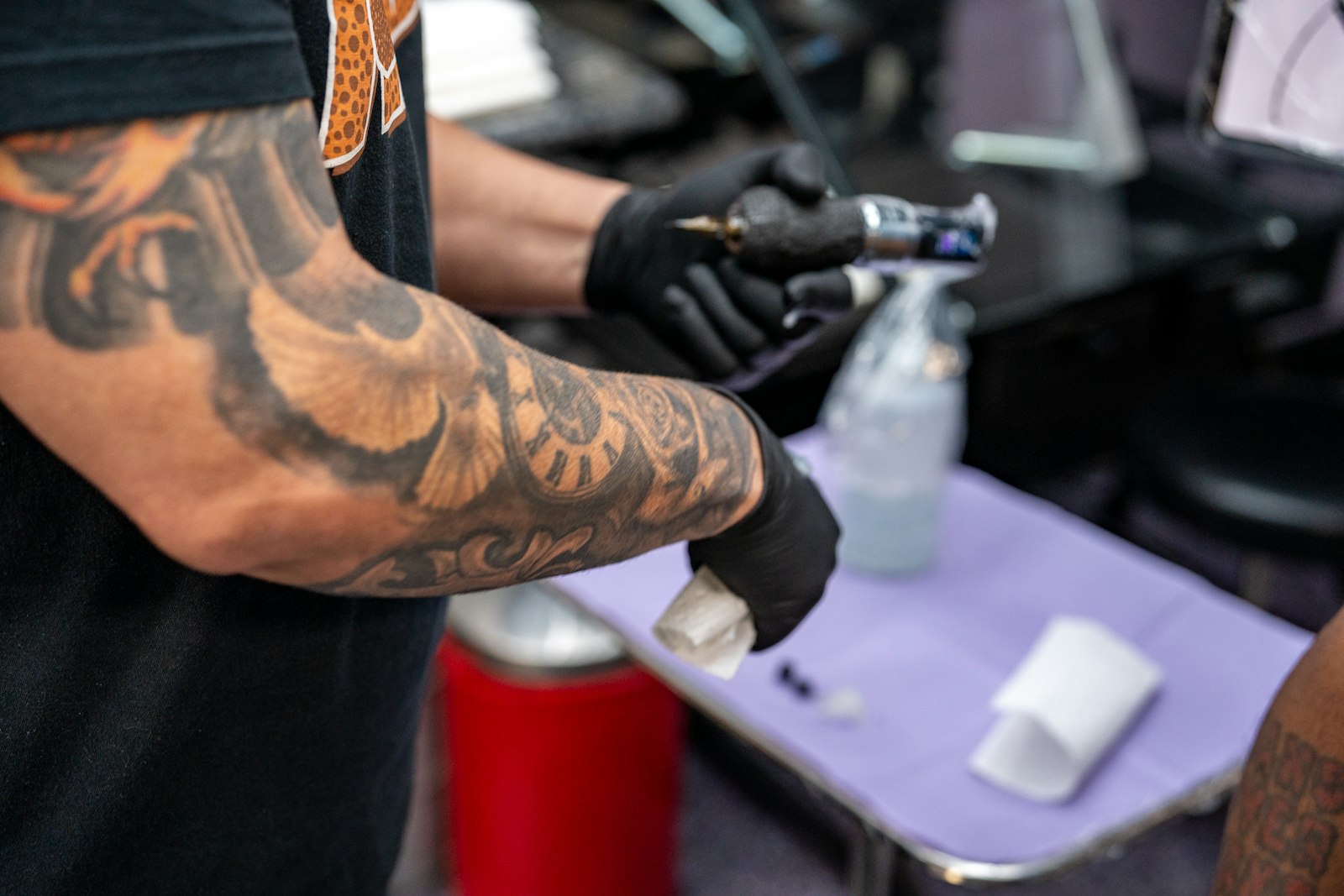
Seattle's tattoo world runs on mentorship. Every skilled artist you've seen got there through years of grinding basics, learning under masters, and developing the hand control that separates a sketch from actual skin art. Apprentice tattoo artists in Seattle represent a pool of serious, detail-obsessed talent who picked discipline over fast-tracking. Their reps are still being earned, one client at a time, which means they show up prepared and focused.
What Apprenticeship Means in Professional Tattooing
Real apprenticeships aren't self-taught garage operations. Seattle's professional apprentices train inside established studios under licensed artists who hold them accountable. They learn sterilization protocols, needle depth, skin mechanics, color theory, and how to actually talk to clients about what they want. At Cleopatra Ink, this training happens in a hospital-grade sterile environment. Every step—setup, technique, aftercare—gets observed and corrected. Most apprentices spend 1–3 years in formal training before they touch a needle solo. That vetting matters. You're getting an artist whose mentor has signed off on their fundamentals.
Five Things to Verify Before Booking an Apprentice Artist
- Licensed mentor oversight: Is the apprentice actually training under a licensed, insured artist in a legit studio? Direct critique from an experienced hand beats a solo portfolio. That accountability is real protection.
- Studio sterilization standards: Do they autoclave between clients, use fresh needles, follow OSHA standards? If the studio cuts corners on sterilization, the apprenticeship training doesn't matter. This is non-negotiable.
- Specialty alignment: Is the apprentice deep in the style you want? An apprentice studying blackwork portraits under Kuya Ramon will crush that niche better than a generalist who dabbles everywhere. Focused skill beats scattered experience.
- Portfolio substance: Skip the Instagram filters. Look for clean lines, consistent shading, proper color depth, and solid healed work. Ask for photos weeks after the tattoo was done. Healed work tells you the truth.
- Artist availability: Real apprentices juggle training and client work, so they usually have tighter booking windows. If someone claims apprentice status but books three months out, they might not actually be in formal training.
How Cleopatra Ink Trains the Next Generation
At Cleopatra Ink, apprenticeship is hands-on. Our artists—Vee, Kuya Ramon, and Seray—mentor emerging talent directly in a working studio. Every apprentice piece happens under supervision with real feedback on technique, client interactions, and professionalism. We run hospital-grade autoclaves for all equipment and hold needle sterility to standards above industry minimums. Apprentices work on the same gear as senior artists and follow identical protocols. No shortcuts, no second-tier sterilization, one standard for everyone.
One client booked a fine line minimalist design with an apprentice here and was blown away not by price, but by how carefully the artist approached the consultation. Forty-five minutes on needle size, ink saturation, skin tone. That's what rigorous apprenticeship teaches you—precision in the details before you ever start. The piece healed clean, and she came back for a second design. That's what you get with apprentices: hungry, meticulous, and backed by a mentor's credibility.
Choosing Apprentice Artists: Real Questions Answered
Are apprentice artists cheaper, and does that mean lower quality?
Apprentices charge less, sure. But pricing reflects experience and portfolio size, not sterilization or care standards. A solid apprenticeship under a real mentor producing clean, well-healed work beats a discount piece from some random unvetted artist. Cost and quality are two different conversations here.
How do I know if an apprentice is ready to tattoo me?
The studio should be clear about it. If we put you with an apprentice, they've finished foundation work and are doing client pieces under supervision. Just ask: "How long in formal apprenticeship?" and "Who mentors them?" Real studios answer that straight.
What if I'm nervous about getting tattooed by someone still learning?
Think of it this way: every move they make gets reviewed by a licensed pro. Compare that to a solo artist with no verifiable background. Formal apprentices are lower risk because they're actively being critiqued. If something's off, the mentor spots it before it becomes permanent.
Can I request a specific apprentice artist, or do walk-ins get whoever's available?
You can usually request by name. Found an apprentice whose work matches your vision? Ask for them. Walk-ins get assigned based on availability, but mention your style and you'll land with someone suited for it. That flexibility is actually useful for first-timers.
Apprentice tattoo artists at Cleopatra Ink combine affordability with accountability. They're trained by licensed, award-winning artists in a hospital-sterile studio, so you're not gambling. Exploring your first piece or bringing a design you've been planning, book your appointment and connect with artists reshaping Seattle's scene. Check out our beginner-friendly artist profiles or see what sets our best artists in Seattle apart.
Browse all artists on the artists page, scroll through recent work in the gallery, and check what each artist specializes in on services.
Read more guides on the Cleopatra Ink Seattle blog.